The Deliberate Agrarian Update: 28 February 2010


February has it's good points, like, for example, people get together each year in Tully New York (not far from where I live) and harvest ice, kind of like they did in the old days. I think that's cool.

But my February has been perfectly dreadful, for the exact same reason it was dreadful last year, and the year before. It is the month when I focus on getting my tax information from the previous year organized and all the numbers added up so I can hand it off to a professional tax preparer. And then he will tell me that I must write a check for a lot of money, payable to the government.

My little home business, Whizbang Books, is not nearly as little as it once was. And my workshop, roughly the size of a two-car garage, is, figuratively speaking, bursting at the seams with all kinds of Whizbang stuff. Sales from my home business have, by the grace of God, doubled each year for the last couple of years. It is not easy money. I work hard for it. And then the government demands a surprising amount of it. They say we have a tax system of “voluntary compliance.” That’s a fine example of oxymoronic doublespeak. Tax time is dreadful, and it never fails to put me in a foul mood.

Joe Stack, of Austin Texas had enough of the government plundering his hard-earned money. and he intentionally flew his airplane into an IRS office this last month. That was quite a few steps beyond just a “foul mood.”

I’ve heard radio commentators say that Mr. Stack was “crazy.” Well, I read his last words, condensed into a 6-page online diatribe, and I don’t think the man was crazy. I think he was a regular guy pushed to desperation by a combination of economic downturn, financial loss, and standard bureaucratic terrorism from the IRS.

Ten years ago, I worked one year as an assistant teacher in a public school vocational program. The job paid $12,000. I had three children and my wife did not work outside our home. Trying to support a family on that income gave me a whole new perspective. The good part was that I didn’t pay any income taxes that year. Fact is, I got a refund that was more than my employer deducted from my paychecks. In other words, the government gave me money I didn’t earn. I think this happens a lot. I don’t think it is right.

I have heard it said that only about 50% of Americans pay income taxes in this country. It has occurred to me that if the other 50% (the lower income class) were told they had to pay income taxes too (or else!), individual acts of violence against the IRS would escalate significantly. And I suspect the government knows this.

The way it looks to me, the fundamental problem with Joe Stack was that he placed way too much hope and trust in the accumulation of money and his own material success. Then, as his financial resources were ravaged by the government and the recent economic decline, his hope turned to hopelessness. When men have no hope, they are prone to despair. Men without hope have nothing to live for. In some instances, men without hope, will turn to acts of desperation. The word “desperate” is defined as, “reckless or violent because of despair.” That was Joe Stack.

I dare say, Joe Stack was just a typical American man who had placed his hope in the material things of this world. Then, when those things were taken away, he was unable to deal with the new reality he faced. Clearly, the man was not a Christian, at least not as defined by the Bible. If he was, his hope in himself and his finances would have been supplanted by the assurance and acceptance of God’s sovereignty and providence. The hope and faith of Christians does not rest on any human wisdom or institution.

Which brings to mind the familiar words of that old Edward Mote (1797-1874) hymn, My Hope is Built:
My hope is built on nothing less,
Than Jesus’ blood and righteousness;
I dare not trust the sweetest frame,
But wholly lean on Jesus’ name.

On Christ, the solid rock I stand;
All other ground is sinking sand,
All other ground is sinking sand.

Christians are called to work (six days a week, according to the Fourth Commandment), and money is a necessity, but we are not called to material prosperity. In fact, we are called to the opposite—to eschew materialism. The accumulation of riches is clearly looked upon as a stumbling block to piety. (see my past essay titled, A Missive on the Prosperity-Driven Life, for more discussion on the subject of Christianity and prosperity).

The world is full of people who cling to worldly, materialistic, man-centered hopes that will, ultimately, fail them. Joe Stack was just one recent and especially sad example.

Sightings in February....

... Any thirteen-year-old blogger who describes himself as a “homeschooled, Libertarian, Christian, Confederate, Agrarian, farmer, country boy,” and who is working on a “5 Year Farm Plan” deserves a mention here. It’s my pleasure to recommend to you The Blog of Graham Donahue.

... And it’s also my pleasure to announce that Granny Miller is Back.

    If you are a George Washington admirer, as I am, be sure to read Granny’s recent blog titled, Love, Sex & George Washington, in which she states: ”At 26 years of age George Washington was almost 6’3”, rich, handsome, built like Adonis and was a complete Babe Magnet – he was the strong and silent type.”

... David Farley is worship leader at the IHOP in Siloam Springs, Arkansas. No, not the International House of Pancakes— the International House of Prayer. I am particularly fond of his song titled “All Orange,” which might fall under the category of mellow, worshipful folk music. If that sounds like something you’d like to hear, go to This MySpace Music Link and click on the free song, All Orange

... I see the Bartlett family up in North Dakota now has a Bartlett Farm web site. Very nice.


An Unusual Expression of Affection
As you well know, there is a day in February dedicated to giving expressions of affection to those we love. We are conditioned from our earliest days of government schooling to celebrate this holiday (at least, I was). Merchandizers crank out all kinds of heart-shaped boxes of candy and so on and so forth for us to buy and give, thus fulfilling our culturally-prescribed obligations.

I sincerely dislike the holiday because I dislike being pressured to conform to the expectations of the merchandizers. Nevertheless, I dare not let the day pass without an expression of affection to my wife. ;-)

In past years, a simple bar of high-quality organic chocolate, and some heartfelt spoken words, along with a hug and a kiss, has sufficed. I am, after all, a simple man and my expressions of affection are therefore simple.

This year, however, was different. This year, my expression of affection took a turn. This year I did something really out of the ordinary. This year I presented Marlene with a bottle of gin and a box of yellow raisins.

As a rule, we are not alcohol drinkers in this family. I’ve drank precious little alcohol in my life and never to excess. Same goes for Marlene. But in recent years, our family has enjoyed some hard cider or a bottle of wine at a special dinner. And I will admit to buying and consuming vodka in various homemade herbal tinctures. That is the extent of our alcohol consumption. So, as you can see, me giving gin to my wife was an oddity.

When I went to the alcohol store, I found shelves full of different gins. I told a guy who worked there that I never bought gin before, “What’s the difference?” I asked. He replied that they were all pretty much the same. I said, “So, this gin for $50 is the same as this gin for $15?”

He said, “Yeah, pretty much.” Well, either he didn’t know what he was talking about, or he wasn’t interested in educating this unsophisticated yokel and gin ignoramus....or all gin is pretty much the same. I bought the $15 bottle.

Marlene was delighted.

She has been telling me about the medicinal wonders of gin and yellow raisins for weeks. It so happens that if you soak yellow raisins in gin, then eat 9 or 10 of them a day, any physical pain you are dealing with will go away—or so they say. Marlene suffers from bouts of back pain, thus her interest in the gin & raisin cure.


You’re probably wondering if it really works. Well, Marlene is still in the early stages of treatment. Thus far, she tells me that the raisins are very good, and it’s hard to eat just nine or ten a day.

If you, or someone you know, is dealing with body pain, you can read about gin & yellow raisins as medicine (and read many testimonials) at this link: Gin Soaked Raisins For Arthritis

Speaking of Work....

The above is yours truly this past month, working at getting Planet Whizbang wheel hoe parts ready to be powder-coat painted. I introduced my Planet Whizbang hoe design just about a year ago when I posted a free internet tutorial explaining how anyone can make their own Planet Whizbang wheel hoe. Since then, I can report that I have sold over half of my first production run of hoe parts. And, to my surprise, since I started offering painted-and-assembled units a couple months ago, they have sold fairly well.

This pleases me to no end because, out of all the Whizbang products I’ve come up with, this wheel hoe is my favorite. Properly used, it is a remarkably useful gardening tool.

On another Whizbang subject: I will be introducing a brand new Whizbang idea and product here soon. This original idea (at least, I think it’s original) solves a little problem I encountered and, in so doing, presents opportunities for numerous useful and creative applications around the homestead and in the garden. How’s that for a vague description? I will give one small hint: it involves t-posts.

I am having this new product made for me and expect to have it ready to sell in time for the growing season here in the northeast. I hope to tell you more in next month’s letter.

A Fine Snowstorm
February 26 brought us a good ol’ Central New York State snowstorm like we haven’t had in some time. I was out before sunrise with my shovel.


Before long, Robert and James and Marlene came out to help. This is the good part about a big snowfall—we were all working together as a family to get the snow out of the driveway. The other good part is that I decided to take the day off from my job.


Enjoying Winter
My son, Robert, bought himself a 2nd-hand snowmobile this last month. Another noisy machine for me to tolerate. Marlene wanted a ride....


Then she got a lesson...


And drove off on her own...

Bluebirds in Winter

I marked the calendar on February 20th. That’s when we noticed that a bluebird couple had returned from their autumn exodus. They were flying around and into one of the bluebird houses by our garden. These birds must be as anxious for spring as I am. They eluded my attempts to photograph them, but the picture above shows one of their houses on that day. It doesn't look very inviting, does it?

Land Update

The picture above shows a view across my garden plot and our property line to the east. The row of grape vines is on the line. On the other side of that, for about three hundred feet, is the section of land that we have a signed purchase offer to buy. But we have been in land limbo for the last two months. I think the holdup is due to the seller’s attorney. Some days I doubt this purchase will go through. If it does not, we will start looking for another section of land (something with more acreage) in the spring and summer.

Industrialized Evangelism

My writings here over the past years (almost five of them) have often touched upon how the industrialization of Western culture has radically changed our way of life, and this not necessarily for the better. Along with everything else, the Christian church itself—an institution that should have stood squarely against the industrial juggernaut—has allowed itself to be shaped by industrialism’s synchronistic powers, which is to say, it has compromised and strayed from the full truth and power of its foundations. One example of this is a common modern evangelical methodology employed to save souls and gain converts.

Sadly, evangelism in our modern age has, to a large degree, been reduced to a mechanical application of tactical rhetoric. And evidence of successful results in many evangelistic outreaches is measured in numbers— how many listeners were persuaded to “accept Christ” and become reborn by simply answering a few questions properly, repeating a prayer, and/or responding to an altar call. After so doing, these new converts are assured that they have eternal salvation.

“With every head bowed and every eye closed,” the modern evangelist will, using the emphatic application of emotional and psychological pressure, often with varying degrees of theatrics, implore the unsaved to come forth.

I’ve grown up in such a form of religion and this approach to evangelism has never set well with me, especially as I’ve gotten older and seen that precious few people thus “saved” progress to deep, life-changing, lifelong faith in Jesus Christ as a result of their conversion experience. It seems that, more often than not, such decisions for Christ are only for a short season—the new convert puts his or her hands to the plow briefly and then turns back.

That is not the definition of biblical salvation, and it falls short of true Christianity. Evangelism that brings a preponderance of shallow and short-lived conversions brings only temporary glory to men and their methods, not eternal glory to God.

And so it is that I have come to question the validity of using mechanistic repeat-this-prayer-and-come-forward (or vice-versa) evangelistic methods that are verifiable by accounting or statistical analysis. Some evangelists who evangelize this way are charlatans. Most are sincere but misled; they know no other way, having been shaped and molded by the modern evangelical zeitgeist.

That is how it appears to me and I recently read an online essay titled “Decisional Regeneration” by James E. Adams that discusses these errors without mocking the genuine intent of most who cleave to them. Adams’ effort is seemingly Quixotic, but necessary and important nonetheless.

It is important because, in the wake of this kind of evangelism, there are vast numbers of people who think they are right with God and who believe they are going to spend eternity with Him just because they went through some religious motions at one point in their life. “Accepting” and confessing Christ after responding to an evangelical message does not make anyone a Christian. A Christian is someone who repents of their sins and follows Jesus Christ . To “repent” means to turn away.

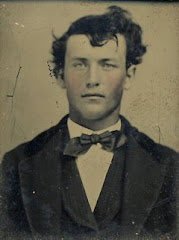
In his essay, Adams explains that prior to 1820 the “old fashioned altar call” was unheard of in the Christian church. It came into vogue with the preaching of Charles Finney (that's him pictured above) in the mid-1800’s, and grew from there.

Renowned evangelists of the past, like Charles Spurgeon, George Whitfield and Jonathan Edwards, never implored their listeners to come to an altar. Instead, they were urged to come to Jesus Christ. There is a subtle but significant difference, and Adams makes it clear.

The “Decisional Regeneration” essay provides an example of an invitation to Christ by Spurgeon that stands in stark, stunning contrast to the typical evangelical invitation of our day. Spurgeon calls on the listeners to come to Jesus and ask Christ to do a work in them. Then he tells them to go home trusting in Jesus.

Then there is the strong opinion of the 19th century theologian, Robert Dabney. Speaking of the disillusionment and failure of so many people misled by clever evangelists, only to fall away, Dabney writes:
”...such is the fatal process of thought through which thousands have passed; until the country is sprinkled all over with infidels, who have been made such by their own experience of spurious religious excitements. They may keep their hostility to themselves in the main; because Christianity now ‘walks in her silver slippers’: but they are not the less steeled against all saving impressions of the truth.”
I respect James E. Adams’ let-us-reason-together approach to this subject and invite you to read his essay in the same spirit: Decisional Regeneration

P.S. Very closely related to this topic is the subject of “What is a Christian?” which is well answered in another online essay, this one by pastor Wayne Mack. The essay begins by presenting “six opinions commonly held about the essence of Christianity.” One such opinion is as follows:
“I know I’m a Christian because when the evangelist gave the invitation I went to the front and made a decision for Christ. My counselor showed me that if I accepted Jesus as my personal Savior, I would never be lost again. I didn’t want to be lost—hell is a terrible place—so I accepted Jesus, and I know now that no matter what happens, God will never reject me. I know it because I went to the altar and professed faith in Jesus Christ.”
Pastor Mack goes on to explain why that is an erroneous belief and he then presents four biblically-based characteristics of a Christian. Here’s the link: What is a Christian?

I’ve Inherited A Dictionary

The above dictionary was bequeathed to me by my aunt last month as a birthday gift. It belonged to her father, my grandfather, Dr. Herrick C. Kimball of Fort Fairfield, Maine. It is 5-1/4” thick and weighs 15.2 pounds. Things like this dictionary are special to a grandson and I’m very glad to have it.

It is a Webster’s dictionary, dated 1909. In the beginning of the volume is a picture of Noah Webster (by the way, it appears that old Noah may have had America's first pompadour, or something close to it.):


The story of Webster’s dictionary is told on the page after his picture. It so happens that Webster spent more than two decades of his life compiling his dictionary, and it was first published in 1828.

Why would he compile such a book? According to the dictionary itself it was “intended for the aid of the self-taught man from his childhood to the end of his life.” Further along it states: “What greater help to the self-education of a people than a dictionary...”

Self-education was a big thing back then. It's how most people in early America got their education. They took responsibility for their own learning. There were no mandatory government schools for children in those days. Yet, as I understand it, the literacy rate at that time was remarkably high.

Columbia University professor Lawrence Cremin, author of the book American Education: The Colonial Experience, concluded from his research that that literacy among adult white males was 70 to 100 percent in Colonial America versus 48 to 74 percent in England.

So, we were a nation of farmers, but not ignorant farmers.

Webster was a devout Christian and this comes through loud and clear in his original 1828 dictionary. In the preface, he wrote the following:
In my view, the Christian religion is the most important and one of the first things in which all children, under a free government ought to be instructed.... No truth is more evident to my mind than that the Christian religion must be the basis of any government intended to secure the rights and privileges of a free people.
I happen to own an old Webster’s Original, though it is an 1895 copy. I bought it at an Auction back in the 1980’s.

As you can see, it has just a little mouse damage. I only paid a dollar for it. Here’s part of Webster’s Original definition for the word, hope:
”confidence in a future event; the highest degree of well-founded expectation of good; such as a hope founded on God’s gracious promises.... A well-founded scriptural hope is, in our religion, the source of ineffable happiness.”
The word, Christian, is defined in part as:
”A real disciple of Christ, one who believes in the truth of the Christian religion, and studies to follow the example, and obey the precepts, of Christ; a believer in Christ who is characterized by real piety.”
And under the word, love, in Webster’s Original we find this:
”The love of God is the first duty of man, and this springs from just views of his attributes or excellences of character, which afford the highest delight to the sanctified heart. Esteem and reverence constitute ingredients in this affection, and a fear of offending him is its inseparable effect.”
Well, you sure don’t find definitions like that in the dictionary these days, unless you buy a copy of  this 1828 reprint.

Home-Canned Beans

The fall harvest season is when most food on our little homestead gets canned. But here in the middle of winter, Marlene canned a few batches of beans. She says winter is an ideal time to can beans because there is more time to get the job done. She cans the beans with a pressure canner as explained in the Ball Blue Book.

The picture above shows kidney beans on the left, garbanzo beans in the middle, and black beans on the right. The kidney and black beans were homegrown. Once canned, these fiber-and-nutrition-packed beans are fully cooked and ready to use in soups, chili, hummus, and salads.

Most recently, Marlene made a barley and black bean salad with cilantro, lime, olive oil, garlic, and onion. It was divine.


Jax Hamlin, Chicken Artist, Update
As mentioned in last month’s blog, I am in the beginning stages of what I hope will be a lifelong and satisfying career as a whimsical chicken artist. But my art will not be my own, so to speak. It will be attributed to the fictitious personage of my neighbor and friend, “Jax” Hamlin, who is a far more interesting and talented person than me.

For example, Mr. Hamlin’s middle name is Xyster  (how's that for interesting?)—a word that is in my grandfather’s dictionary, and he would certainly have been familiar with it.

I feel perfectly comfortable with this duplicitous (but innocent and harmless) artistic arrangement because, after all, we artists must follow our muse, which marches to the beat of a different drummer, don’t ya know?

And I do want to say a big thank you to those readers who offered words of encouragement to this budding chicken artist last month...both of us.

That said, here is another example of Jax Hamlin’s artwork from February, 2010:


See you next month....

The Deliberate Agrarian Update: 31 January 2010


On this day, the last of January, 52 years ago, I was born. My mother once told me I was a forceps delivery. So, it turns out I was pulled (with an instrument of cold steel clamped on my head), kicking and screaming into this world. She referred to me as a “poor little thing” because I was left so bruised by the rough handling.

My father was then a student at Bowdoin College in Maine. He would go on to Tufts medical school in Boston and, like his father before him (also a Bowdoin graduate), distinguish himself as a doctor.

I wonder... what hopes and dreams and expectations did my parents have for the battered little me so many years ago? Did they suppose I would go on to graduate from Bowdoin too? Surely they would not have imagined that I would barely graduate from high school, go into the building trades, and eventually distinguish myself for writing a book that tells people how to make their own chicken plucking machine. Life is funny like that.

Me & My Banjo: One Year Later
Last year around this time I wrote here about the birthday present I bought myself—a very fine handcrafted banjo. I figured it was about time I finally learned to play a musical instrument, and reasoned that it couldn’t be much more difficult than learning to skillfully butcher a chicken.

Well, silly me. I was wrong.

I was hoping to be playing Shady Grove like Doc Watson by now but (and it pains me to admit this) I can’t even play Twinkle Twinkle Little Star. I am an utter failure as a banjo player.

I now realize more fully that people who play the banjo particularly well—people like the Bartlett boys up in North Dakota, or Chris Saenz in Kentucky, or Ricky Skaggs, wherever he lives—are musical geniuses.... and I am not. Clearly, these people were not delivered with forceps.

I am cognizant of Thomas Edison’s famous quip that genius is 1% inspiration and 99% perspiration. Such insight—from a man who was labeled as “addled” by his grade school teacher—has been a ray of hope to me for many years. I’ve never been averse to hard work. I am persistent. And I’m sure some have thought me addled too, though they would not have used that particular term. But, I ask you, could Thomas Edison play banjo? I doubt it.

Truth be told, when spring rolled around last year, I laid my banjo aside, focusing instead on the work of my garden, and my home, and of selling chicken plucker parts to people who read my book.

However, on rare occasions, I will take my banjo out of its case, tune it up, pluck the strings for a half hour or so, and marvel—not only at the beautiful tones that come from precisely tightened lengths of wire, but at the incredible ability of some people to make intelligent and beautiful music come from such a simple instrument.

Hambone & Harmonica
Not only am I musically inept, I’m also woefully ignorant of musical things in general. For example I never realized that slapping your hands on your body in rhythm was referred to as playing the “hambone.” And this “instrument” can be downright fascinating to watch, as you will see in this YouTube clip.


So I did some more looking around and found This Classic Hambone Performance From an old episode of HeeHaw.

And it turns out that some really talented people can play hambone and sing... at the same time.
(Check it out Here)

Introducing The Whizbang Row Cover Hoop System
I have put together an internet tutorial explaining the system I developed for using row cover fabric in my garden. This has been a long time coming. I hope you can put the information to good use. Check it out at this link: www.WhizbangRowCover.com

Robert E. Lee’s Perspective on The Future

I’m an admirer of Robert E. Lee—so much so that I named one of my sons Robert E. Lee Kimball. So I was delighted to read the following quote from the great Southern general and Christian believer in Franklin Sanders’ daily e-mail report. This perspective is something for us all to keep in mind:
"In spite of failures which I lament, of errors which I now see and acknowledge, or of the present aspect of affairs, do I despair the future?  The truth is this:  the march of Providence is so slow, our desires so impatient, the work of progress is so immense, & our  means of aiding it so feeble, the life of humanity is so long, that of the individual so brief, that we often see only the ebb of the advancing wave and are thus discouraged.  It is history that teaches us to hope."

Robert E. Lee These Days

My son Robert worked the month of January outdoors every day in the woods, helping to run lines for a very large maple syrup operation. We’re talking many thousands of taps, and a tremendous volume of sap. It is industrialized maple syrup production.

On the weekends he cuts loose with his four wheeler. I can’t stand the noisy thing, but the kids have fun with it, as the picture above attests. And the machine has been a real learning experience, as Robert has rebuilt the engine a couple of times.


The Honeybee-Evolution Conundrum
As I have been reading more about honeybees and beekeeping (see my previous monthly updates), I’ve encountered an interesting evolutionary conundrum. Just about all the bee books I’ve been reading mention something about the honeybee evolving over many millions of years. This is, of course, in line with mainstream thinking that assumes evolutionary theory is rock-solid fact, supported by overwhelming scientific evidence.

But anyone who has honestly looked at the evolution perspective understands that evolutionary science is as faith-based as creation science. I’m inclined to think it takes more faith to believe in evolution than to believe in creation, and honeybees are a case in point. It takes a whole lot of creative “scientific” theory to make honeybee evolution work. Here’s what I mean (this involves a bit of introduction)...

Honeybees function and thrive only in a colony. You can not keep a single bee as a pet. It will die. It must be part of the colony, and within a colony of 50,000 or so bees, there are three distinct kinds of bees.

Worker Bees: Worker bees do virtually all the work of the colony. They gather nectar and pollen, make honey, feed and nurture the young, protect the hive, and much more. These worker bees do everything except reproduce. They can not and do not lay eggs that become the next generation of bees.

Drone Bees: Drones are the male bees. There may be a couple thousand drones in a colony. Drones do none of the work of the hive. Their only purpose they serve is to mate with the queen when this is needed.

Queen Bee: A healthy bee colony has one single queen bee. She is a female with reproductive capacity. In fact, the queen’s only purpose in life it to be bred by one or more drones in a single mating flight early in her life, then to spend the rest of her years laying eggs that will be the next generations of workers and drones. She will also lay the egg that becomes her replacement. That is all the queen bee does. And despite the title of queen, she is not in charge of the hive (science can not account for the pervasive controlling “instinct” that guides the colony).

Now, knowing all that, the conundrum arises: How can evolution possibly apply to honeybees when there is no genetic transference between the worker bees (those that do almost all the various tasks of the hive) and the next generation?

Restated: Faith-based evolution explains to its acolytes that many small, favorable, genetic changes (i.e., mutations) that occur in a species are passed to the next generation, again and again, over millions and millions of years, adding up to big changes in the organism and its ability to survive (survival of the fittest). But this just doesn’t hold water with honeybees because if there were favorable genetic mutations in the female worker bee, it is impossible for these to be passed on because the female workers do not lay eggs.

I heard this explained once when I was a teenager (a long time ago), have read nothing about it since, and could not find any information about it on the internet. Only now, as I’ve been reading about beekeeping, has it “popped up” in my thinking.

For Sale: Little Red
Back in June of 2007 I paid $600 for the little red car pictured above. It had a little over 160,000 miles on it and the fifth gear did not work. But it ran good. I put brakes on it and a new battery and it has continued to run since then without any trouble. Little Red has been an economical car in every sense of the word. But it now has a tad over 200,000 miles on the odometer and the catalytic converter needs replacing. Catalytic converters are expensive and, considering everything else, I decided to get another car.

My new unit is also a Nissan Sentra. It is a 2002 with low mileage (146,000). I paid a bit more than $600 for it but not much. The important thing was that I was able to pay cash, and that’s a good feeling.

My new car is a sedan, which means I’ll be able to cram more stuff more easily in the back seat. I use my car for getting to and from work every day and for hauling things that I used to haul with a pickup (years ago). I like my “new” car but it is way too quiet, and it’s a boring gray color.

So Little Red is for sale. She’s rusty, and rattles driving down the road, and the sunroof leaks, and the dvd player doesn’t play, and it still doesn’t have a fifth gear, and it’s really loud (but it sounds really cool). My family can hear me coming home from a mile away. Here’s a look under the hood:


Make me an offer :-)

—Sneak Preview—
Planet Whizbang Garden Tote


I decided to make a nice garden tote for Marlene. It is pictured above with some Copra onions from last year’s garden.

I actually made four other totes before I got to the design shown above. And there will be a couple more minor modifications to the design before I’m satisfied and ready to officially reveal this new product to the world.

The tote is a simple, practical homestead tool that is built to last for a good many years. These totes are attractive and useful and would make a fine gift for any countrywoman on your gift list.

I even think an enterprising person with the tools and skills could make these totes and sell them for a reasonable profit at farm markets and craft shows.

If you are halfway handy, you can just look at the picture and make your own garden tote, but my plans will provide you with and intelligent approach to easily and successfully get the project done—one that guarantees you a very nice finished product made with a minimum of trouble.

[Update: April 2014—The tote plans are now available at This Link]

—More Yeoman Furniture—
A Shaker Towel Rack
I’m still plugging away on the bathroom remodeling project that I started last October. In a previous monthly report I showed you the Yeoman cabinet I made for the room. Now I’ve made a matching towel rack, as pictured above.

This rack is modeled after a circa 1840 Shaker drying rack that is in the Fruitlands Museums in Harvard, Mass. I have not been to that museum but I bought the book, Making Authentic Shaker Furniture, by John G Shea, and the drying rack is in there.

My Shaker-inspired towel rack is made entirely of common 3/4” pine. It has a layer of red milk paint with a layer of black over it. Then it was sanded and sealed with linseed oil. I intend to give it a few coats of spar varnish. The rails are secured to the upright posts with pegged mortise and tenons. Here is a close up:


The bottom looks like a block of solid wood (as the Shakers would have used)...


...but it is really just hollow 3/4” pine and I put some lead weights inside:


Shaker Worship
As I’m sure you know, the Shakers were a religious sect. They started with Mother Ann Lee who came to America from England in 1774 with eight of her faithful followers. They were officially known as “The United Society of Believers in Christ’s Second Appearing.” But they had an unusual ritualistic dance that led the “unbelievers” around them to call them Shakers.

A few years ago my family visited Hancock Shaker village in Massachusetts. There is a room with several informative displays where you can read about the Shakers before going into the village. Most people breeze through this area because it takes some time to read the information. But I stayed and read.

I’ll never forget standing in front of an old drawing showing the Shakers doing their worship dance. As I was reading about their religious beliefs and outward expressions of worship, a family was standing behind me. The mother read the same information that I was reading, but she read it out loud to her husband and children. After she was done reading, I’ll never forget her comment: “Wow. That is sooo...(long pause while she thinks about the right word to use)...Satanic.”

Here is an excerpt from “Making Authentic Shaker Furniture.”
The incongruity of sober, orderly and industrious individuals, so completely cutting loose in the guise of worship, defies explanation. For once their Sunday ceremonies started, all inhibitions of their everyday lives seemed to escape in wild outbursts of song and dance with overtones of the mystical fanaticism which was part of their religious worship.

While, later on, the Shaker dances and rituals were rehearsed and became more formalized, the fanatical nature of their worship was laced with hallucinogenic apparitions and a sort of spiritualism which seemed to induce mass hysteria. They joined in emotional outbursts of prayer for salvation and violent denunciations of the devil who lurked in the “outside world.” They exhibited their “gifts” of song and movement as well as the “gift of tongues” which enabled them to sing in unknown languages and conduct mumbled conversations with St. Peter, John the Baptist, Mother Ann, and even General George Washington.
That sounds like a blend of hyper-Pentecostalism and Spiritualism. I have read elsewhere that Spiritualism (which was in vogue during the mid 1800s, as I mentioned in last month’s blog essay) was, indeed, integrated into the Shaker belief system. They tended to adopt different ideas, and their theology underwent changes over the years. But they sure did make some nice furniture.

Some Investment Advice
An investment is something you put money, time, or other capital into with the intention and expectation that a benefit of greater value will eventually be realized. Most people, when they think of investment advice, think only of money and ways of making their money make more money. I’m not qualified to give you that kind of advice because I’m not a successful investor in that way. But I would like to offer one bit of investment advice that I have been successful at. Here it is.....

Grow a garden. Many of you reading this already have gardens and I don’t have to tell you about this. But you may consider what follows as a midwinter pep talk (perhaps you’ll want to grow a bigger garden). In any event, here are the benefits that investing in some seeds and plants and tools, and focusing on growing your own food will bring:

Food— A few seeds, planted in the ground and carefully husbanded, will yield a LOT of food. This is God’s economy in action. Since it would otherwise cost you money to buy food, you are, in a sense, growing money when you grow a garden. And this is an economic benefit that you can enjoy in the midst of economic inflation, deflation, prosperity, or a total crash.

Good Food— When you grow your own food, it is fresher and more wholesome than what you can buy in a store. And it’s not mystery food from who-knows-where. It’s food you can trust to be good in a world full of food you can not trust.

Security— People who grow their own food (even just some of their own food) have a measure of personal security that those who do not garden will never have. Don’t be one of the helpless masses of non-gardeners.

Exercise— People with sedentary modern jobs spend a lot of money on exercise club memberships trying to make up for their lack of physical activity and keep their bodies in shape. Gardening provides you with an excellent opportunity for free outdoor exercise: digging, hoeing, hilling and so on. For a little exercise, grow a little garden. For a lot of exercise, grow a lot of garden.

Sunshine— Most moderns don’t get enough sunshine and that’s unhealthy. Then there are the legions of people who spend money getting an artificial tanning-booth tan. Save the money. Garden. Get a real tan.

Satisfaction— Modern men, women, and children are conditioned by the media (in collusion with the industrial providers) to be dissatisfied unless they can buy the newest so-called convenience or nifty gadget, which is soon broken or outdated or familiar and less satisfying. So we pursue the acquisition of so much material stuff, again and again, even though we know the satisfaction from these things is fleeting.

Genuine satisfaction rarely comes from buying something. True satisfaction comes when we pursue an objective that is constructive, productive, and creative, using our minds and our hands. This kind of satisfaction comes when you plant a seed, nurture it into food, harvest it, and eat it. Your body and, in a sense, your soul are both nourished by homegrown food.

Wonder, Beauty, Excitement— A simple garden has more wonder and beauty in it than any movie or video game or museum or cheap thrill that is offered by the industrialized culture. Agri-culture is your ticket to partake in the awesomeness of God’s creation.

My One Gardening Book Recommendation

Over the years I have bought all kinds of gardening books. I have gardening books by Eliot Coleman, John Jeavons, Mel Bartholomew, Leandre Poisson, Dick Raymond, Reader’s Digest, and others. All of them are good in their own way. But last year I bought a copy of Steve Solomon’s, Gardening When It Counts: Growing Food in Hard Times.

Steve Solomon, founder of the Territorial Seeds company, has an approach to gardening (based on decades of experience) that is down to earth, which means it is simple, practical, and intelligent. Last year around this time I mentioned "Gardening When it Counts" and posted several excerpts from the book. You can read them at this link: Gardening Bits For Hard Times

In my gardening bits essay, I mention Steve Solomon’s Complete Organic Fertilizer (COF) recipe. Last spring I bought the ingredients for this fertilizer in bulk. They were all at my local agricultural supply store and, except for the kelp meal, everything was relatively cheap.

I mixed the proportions and used the fertilizer in my garden and I can tell you that I was very pleased with the results. I have enough COF left over to use in my garden again this year, and maybe even the following. Give Solomon’s methods and his COF a try and I think you’ll be pleased too.

A Home-Based Seed Company Recommendation
We bought most of our garden seeds this year from Wood Prairie Farm up in Bridgewater, Maine (population 612). The Gerritsen family has been farming organically there for over 30 years. They happen to live a short way down the road from my mother’s sister (Aunt Irene). I’ve written here before of this family farm in my essay titled: Aroostook’s Wood Prairie Farm.

What I happen to like about their seed selection is that it is limited. There are not so many mind-boggling choices. But the seeds being offered strike me as exceptionally fine varieties. Unfortunately, some seeds were sold out by the time I ordered.

Even if you have your garden seeds, or you decide to buy somewhere else, I suggest that you click on the link above and check out everything that Wood Prairie Farm offers, especially if you have aspirations of having your own successful farm or homestead business. Wood Prairie appears to be another exemplary farm, which is to say, a fine example of a small family farm that is surviving and thriving when so many small farms in the countryside are not.

Edison’s advice comes to mind—This hard working farm family is doing an exceptional job of marketing their diversified line of wholesome products, and they are doing it from all the way up in Northern Maine. One thing I was surprised to see is that Wood Prairie sells root crops by mail through the winter months.

Potato Pickin’ POWs

My mother grew up the daughter of a Potato farmer in Aroostook County Maine. As a girl, she picked potatoes. Just about every kid up there picked potatoes during harvest time. They would pick the potatoes off the ground into baskets and then carry the baskets to the end of the row and dump into a wooden barrel. They would be paid by the barrel. The public school would be shut down for a couple weeks so kids could help get the harvest in. It was long, hard, cold work, but it was work done in community and it is a part of that culture that is now virtually gone. Too bad.

With that in mind, my mother once told me that she remembered German prisoners of war helping to pick potatoes. I recently found the above picture that shows two such POWs in 1945. My mom would have been 10 years old when that picture was taken.

The picture came from the web site at Maine Memory Network. By the way, I’ve heard it said that Maine is a small town spread out over a large state. I like that.

The following YouTube video does an exceptional job of telling the story of raising potatoes in Aroostook county, and it also shows the Wood Prairie operation:


—Mayflower—
Further Insights Into The Pilgrim Story

In my teen years I spent a good portion of two summer vacations at a rustic little camp (no electricity or running water) on a small pond not far from Plymouth, Massachusetts. During that time I became better acquainted with the story of the Mayflower Pilgrims who landed and settled in Plymouth in the winter of 1620.

As a result, I developed a special regard for these brave and devoted Christian separatists. Later on I attended a series of lectures by Peter Marshall, co-author of The Light and the Glory: 1492-1793 (God's Plan for America). Then I found out from my Grandmother Kimball, keeper of the family history, that I am a Mayflower descendent.

Many Americans claim such lineage and it is not an outlandish thing because it has been calculated that more than 35 million Americans are, indeed, Mayflower descendants. It should be noted that not all the passengers on the Mayflower were Pilgrims, so it is possible to be a Mayflower descendant and not a Pilgrim descendant. Whatever the case, there is a good chance that your kin and mine shared in the adventure and tragedy of that amazing time in America’s history.

And so it was with great anticipation and interest that I read the book, Mayflower: A Story of Courage, Community, and War, by Nathaniel Philbrick this last month. The book drew me, not only for its subject matter, but for its author. My mother was a Philbrick of New England ancestry.

“Mayflower” turned out to be an exceptionally fine historical narrative. In fact, I found it riveting. If you have an interest in Pilgrim history, you must read this book. You’ll learn many things you did not know about the Pilgrim story. But I must warn you—some of it will disappoint.

The historical account begins with who the Pilgrims were and why they fled to America. Philbrick aptly presents the incredible hardship and providential events (though he does not attribute them to Providence) that the dedicated Believers encountered on their way to Plymouth, and in the beginning years of the colony. Then the book goes into the story of the Pilgrim/indian relations and culminates with a fascinating chronicle of King Philip’s War, which, hitherto, I knew almost nothing about.

You may already know that the original Pilgrim settlers made a peace treaty with the indian sachem, Massasoit, of the Pokanoket tribe (later known as the Wampanog), and that this peace treaty lasted for more than 50 years. But you may not realize that the Pokanokets were only one tribe among many in the Cape Cod area, and Pilgrim relations with these other tribes was not always rosy.

In one particularly fascinating part of the book the story is told of the Pilgrims, led by their military leader, Miles Standish, making a preemptive military move against an unfriendly tribe to the north. They had heard that this tribe intended to attack another English (not Pilgrim) settlement, then sweep down to Plymouth.

Standish and his small band of Pilgrims lured two indian warrior leaders (with the invitation of a meal) into a building in the English settlement. Once the indians sat down to the meal, Standish grabbed a knife that was around the neck of one warrior (the leader) and proceeded to stab him. While Standish and the indian fought it out, the other Pilgrim men fell on the other indian. Both indians were killed.

The story goes that the indian Standish killed had boasted to him the day before that he would one day kill Standish with the knife around his neck. The indian had taken it from a French sailor who he had killed. Though the indian was much bigger than Standish (a noticeably short man) Standish was a stocky bulldog of a man who wasn’t afraid of a fight.

The Pilgrims brought the severed heads of the two indians back to Plymouth and mounted them on poles for all other indians to see. This image doesn’t seem to fit with the usual image of the Pilgrims, and the event was a matter of great concern to their spiritual leader, Pastor John Robinson.

As for King Philip’s War (which occurred many years after the preceding incident), it turns out that King Philip was an indian sachem, the son of Massasoit. He led an indian uprising against the sons and grandsons of the original Pilgrim settlers in June of 1675. For the next 14 months all of southern New England was involved in the brutal, bloody war (with lots of head severing).

Philbrick says it was one of the most horrendous wars ever fought in North America, and that comes across pretty clear in the book. Large numbers of English settlers (8% of the population) and indians died. Captured indians were kept as “servants” or sold as slaves and shipped off to sugar plantations.

Out of the drama of the conflict emerged a remarkable historical figure named Benjamin Church, who is described by Philbrick as “part Pilgrim, part mariner, part indian, and altogether his own.” Single-handedly, Church made allies with various indians (an option the Pilgrim and Puritan forces refused to consider—until Church proved it could work), and led them in an unconventional but successful campaign against King Philip.

Mayflower is certainly not a mythologizing eulogy to the Pilgrim era of American history. It is a gritty and human account of gritty and enigmatically human people struggling with circumstances like you and I will never know. It’s worth noting that the historical account is one man’s historical interpretation of events that took place some 350 years ago. So some of the story, like all such stories, is undoubtedly inaccurate and incomplete. Nevertheless, it is clear that the book was very well researched and, though Philbrick is a secular author, his account is probably as honest and fair-minded as you’ll find. I recommend this book to you.

We Discover Road To Avonlea

My thanks to D.A. reader Carmen in North Carolina who wrote to tell me about the television series, Road to Avonlea, which ran from 1990 to 1996. I started to disengage from the culture of television in the early 1980s and had never heard of Road to Avonlea. On Carmen’s recommendation, we ordered a Netflix DVD of some of the first shows.

Marlene and I have now watched several episodes. We are enjoying them very much on these cold winter evenings, and look forward to seeing them all.

The show focuses on a rural community in turn-of-the-century Prince Edward Island (not too far from Aroostook County Maine). The scenery is beautiful and that is as endearing as some of the characters, particularly the adult actors like Olivia King, Gus Pike and Rachel Linde, who are my favorites.

This is probably old news to most of you reading this, but if some of you, like me, have never seen Road to Avonlea, I recommend it to you. If you like Little House on the Prairie and The Waltons, you will like Road to Avalon—though it is quite different from those programs.
I see the series is also available at Amazon


—Food For Thought—
About Contentious Religious Disputers

I’m not usually a contentious person, and I rarely (if ever) feel compelled to “set people straight” in their religious thinking. But it has been my observation that many other people are inclined to do this sort of thing, and in the most strident manner, and it never sets well with me. With that in mind, I was reading an article by Keith A. Mathson in the latest issue of Tabletalk magazine and came upon the following quotes from a letter written by John Newton, author of the hymn, “Amazing Grace.”

This particular letter was written by Newton “to a fellow minister who was preparing to write an article criticizing another minister for his lack of orthodoxy.” Here are two quotes from Newton:

“There is a principle of self, which disposes us to despise those who differ from us; and we think often under its influence, when we think we are only showing a becoming zeal in the cause of God.”
“Self-righteousness can feed upon doctrines as well as upon works; and a man may have the heart of a Pharisee, while his head is stored with orthodox notions of the unworthiness of the creature and the riches of free grace.”

Mathson writes: “Regarding our own hearts, Newton observes that we must contend for the faith, but he also observes that very few writers of controversy have not been hurt by it.” He quotes from Newton’s letter again (and this is the main point I want to present to you):

“Either they grow in a sense of their own importance, or imbibe an angry, contentious spirit, or they insensibly withdraw their attention from those things which are the food and the immediate support of the life of faith, and spend their time and strength upon matters which are at most but of a secondary value. This shows that if the service is honorable, it is dangerous. What will it profit a man if he gains his cause and silences his adversary, if at the same time he loses that humble, tender frame of spirit in which the Lord delights, and to which the promise of his presence is made?”
.....My Eric Sloane Print.....

Among artists, I’m fond of Eric Sloane, who also wrote many books. I’ve written of Sloane here before in my essay titled: The Christian Agrarian "Awareness" of Eric Sloane. and Diary of an Early American Boy.

Back in late 2008, with the economy at large crashing all around, I went to Ebay and looked (as I often do) for Eric Sloane prints. I knew from previous searches that signed prints by Eric Slaone typically sold for several hundred dollars. As a result, I never bought one. Spending that much money for an art print is not something I’ve ever done and not something I’m likely to ever do. So I window shop.

But, lo and behold, there was a signed Sloane print and the bid was less than $100. It was an artist’s proof of a painting I had seen before and always liked. The print was part of an estate and had never been framed (it has a price of $250 penciled on a back corner). I placed a bid, assuming that I would be outbid, but , amazingly, I wasn’t. All I can think is that all the other Sloane aficionados out there were preoccupied with the economy and hesitant to part with the money.

So I now have this “rare” Eric Sloane signed print and part of me says, “sell it.” But, on the other hand, another part of me says, “enjoy it.” I think I’ll probably enjoy it. I just need to make a frame for it and get a mat cut, and one of these days I’ll get to it. I’ll show you the whole thing then.


I have related this story to you as a lead-in to another idea that I’ve had in my mind for some time, and I finally got around to doing it this month....

How To Make Your Own Eric Sloane Forgery


I have been meaning to draw an Eric Sloane forgery for years. I reasoned that I would never be able to afford an actual Eric Sloane drawing, so I would just make my own. Sloane was adept at painting, but he was a master with a simple black pen on white paper. It so happens that pen and ink drawings are very easy to copy.

I have an old paperback copy of Eric Slaone’s book, “Our Vanishing Landscape.” The first page has a pen and ink illustration that I really like and I decided that would be a fine illustration for my first forgery. The final result, pictured above, took me an hour to “draw.” I bought an inexpensive mat and frame and had the genuine pen and ink drawing on my wall in no time. And I’m well pleased with it.

Which brings to mind my comments about real satisfaction that I penned earlier in this essay. Nice as that “rare” signed print I bought is, the simple handcrafted Eric Sloane forgery I made myself is far more satisfying to me.

If you could see this original work of art up close I think you would be impressed. Now I’ll tell you how to make your own forgery. It’s really easy.

The illustration in the book was fairly small. I wanted my version to be bigger, as I’m sure Slaone’s original was. So I took the book to a copy store and enlarged the drawing on a photocopy machine. Then I simply placed a clean sheet of white parchment paper over the photocopy and traced with a good pen. Here’s a picture that tells the story;


That is an inexpensive light box I’ve had for years and used when making drawings for the books that I’ve self published. The photocopy is below and the forgery is above. Like I said, it took me about an hour to trace the original and, though tedious, it was kind of fun following every squiggly track of the master’s pen.


—Truly Original Art—
Coming Someday Soon 
(maybe)
I think Eric Sloane started as an artist and branched out into writing books. I started out writing books and now want to branch out into art. Not to worry—I won’t be doing portraits (see last month’s letter). I’ll be doing something much more serious.... I’ve decided that I want to be a whimsical chicken artist.

Hens and roosters are wonderful subjects for a budding artist to capture, and that’s me—a budding artist. But as I’ve been considering this idea, I’ve decided that I will pursue my professional career as a chicken artist through the fictitious personage of my friend and neighbor (and, perhaps, something of an alter ego) “Jax” Hamlin.

Mr. Hamlin is an interesting older fellow and he has a local reputation hereabouts as a chicken artist. I’ll have a web site telling the unique story of Jax and how he came to draw chickens. I will broker limited edition originals for my friend through sales on Ebay and the web site.

If all of this sounds a bit zany, that’s because it is. But I’m serious about the chicken art, and am devoting my abilities to this esoteric pursuit almost every day. The way I look at it, if I’m not talented enough to learn to play a banjo, then I’ll be a chicken artist. Marlene is a little concerned about me but it’s okay. I was, after all, a forceps delivery. ;-)

If all goes as I hope, this idea will launch next winter. 


Stay tuned....

Welcome To The Deliberate Agrarian


After four years and hundreds of essays, I ceased writing for this blog in April of 2009. But my body of writings here remain as a relevant testimony to the wisdom and goodness found in a Deliberate Agrarian lifestyle.

I invite you to peruse the Deliberate Agrarian archive (links are on the right column of this page). There is a wealth of down-to-earth inspiration and how-to information to be found there:

Yours truly,

Herrick Kimball
(hckimball@bci.net)