The Deliberate Agrarian Update
31 July 2010


I am ever-mindful of how blessed my sons are to have been born and live out here in the wide open rural countryside of upstate New York. They have not grown up in the squalid realms of a packed suburban housing development, as I did. Neither have they suffered the pains of divorced parents and all of that, as I did. And, being homeschooled from the beginning, they have not been institutionalized by years of government schooling. Furthermore, within this God-fearing, home-centered, agrarian way of life our family lives, they have been shielded to a significant degree from the pernicious feminizing forces of our popular culture.


So it is that  my boys have been able to run, and ride, and climb, and explore, and shoot, and trap, and fully experience the manifold thrills that are available within this fresh and free world of rural living. Such a childhood, once common, is now relatively rare in this nation where most of the youth are housed in urban or suburban centers.


Swimming in a farm pond with your friends on a hot July day certainly qualifies as a rural thrill, especially when the water is deep and there is a dock to jump off. The pond is in a field back behind our house and my kids swim there compliments of a good country neighbor.


The picture above shows my middle son, Robert, grandstanding for his brother’s camera. And this next shot is his brother, James.


And this next picture gives you an idea what these sons of mine often look like before they go swimming.


Such pictures warm my heart because this is the exact kind of life Marlene and I deliberately set out to give our children many years ago.


Some fathers want their sons to have a better education than they had so they’ll grow up to get a high-paying job. But those things are not big priorities to me. I wanted my children to grow up with a better childhood than I had. And, thank God, they have.


Barns & Memories


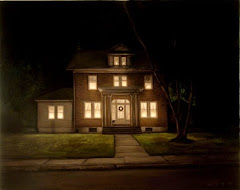
Garth Fout, the enterprising, multitalented Ohio artist and Etsy entrepreneur, has me thinking about barns here at the end of this short, hot, muggy month of July 2010. That beautiful barn pictured above happens to belong to Garth. Before I tell you about Garth’s barn, I want to tell you about a barn I remember from my youth.


No, it wasn’t in the crowded housing project. There were no barns there. Just houses—street after street of so many little one-story ranch houses, all pretty much the same.


The barn of my youth was in the veritable wilderness of Aroostook County, Maine, way up there near the top. You take US Route 1 north until the end of that road, then you keep going.


My grandfather, Percy Orlan Philbrick of Fort Fairfield, Maine, had a big white barn built into the side of a bank, with a cavernous, cool, dark  potato cellar underneath. His barn was full of stuff he had accumulated over a lifetime. I remember it was packed to the rafters in places and everything was covered with a layer of dust.


My grandfather’s barn was a great place for curious boys to explore and that’s exactly what my cousin, Peter, and I were doing the summer after Percy passed away in 1971. I was 13 and Peter was a year older.


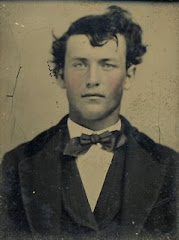
Here’s a picture that my Aunt Irene, of Bridgewater, Maine, sent me awhile back. It is grandfather Percy and me, or so she thought. But I’m quite certain it is actually Peter. I can tell by the eyebrows.


Anyway, years later and all growed up, while exploring in our grandfather’s barn, in a drawer full of big old rusty bolts, Peter and I found something very exciting...


“What are these?” I asked Peter, holding the little paper cylinders up in the air.


“Those are firecrackers!” Peter exclaimed, while reaching to quickly take them from me.


I had never seen firecrackers up close, but I certainly knew what a firecracker was. Peter put them in his pocket... for later.


Squeezing between some old farm equipment in that barn, I snagged myself on a sharp piece of metal. It sliced deep into my thigh. The gash probably could have used stitches but Band-Aids sufficed. Today, the clearly visible scar is a reminder of that summer—the summer Peter and I found the firecrackers in our Grampie Philbrick’s barn.


A couple weeks later, back at Peter’s house in Springfield, Mass., we decided it was time to light one of the firecrackers (all the adults were gone). We had been eagerly anticipating the moment for a long time. Having no experience with fireworks, we were a little bit scared. It was decided that Peter would light the fuse and throw the firecracker away from us, on the blacktop driveway, and that’s what he did. 

We stood there, half turned away, fingers in ears, eyes squinted almost shut, watching the little object, anticipating the big bang.


The fuse quickly sparked down... and nothing happened.


The firecracker just sat there with a little smokey haze wafting above it.


"It’s a dud.” Peter said.


We walked over and looked at the firecracker. I reached down to pick it up.


Peter yelled, “Don’t touch it!”


I stopped, my fingers almost on the firecracker, and started to pull my hand back. At that instant, the firecracker exploded.


Had Peter not yelled, I would have been holding that little stick of explosives in my hand when it blew up. It was a close call.


==========


I can not let the subject of my grandfather’s barn pass without telling you about the barrels. In a room under the barn, right next to the cavernous dark cellar made for storing the potato harvest, there was a small, stark room with a south-facing window (I just checked Google Maps for the direction). It was used by my grandfather as a workshop to fix damaged wood-stave potato barrels. Here is a picture of the kind of barrels I’m talking about.


Percy was retired from potato farming by the time I knew him. His health was declining. But he made some money fixing potato barrels for other farmers. They would bring their damaged barrels to him by the truckload.


I was maybe seven years old when this recollection took place. I was visiting for the summer, staying some of the time with my Grandmother Kimball in town and some of the time with my Philbrick grandparents at their farm. Those were the good old days for me.


My grandfather would have his breakfast and then go to his workshop to fix barrels until lunch time. Some days he would work in the afternoon too. I tagged along. The shop was cool and he would start a little fire in a small stove, fueling it with broken barrel pieces.


He gave me a hammer and a big screwdriver and showed me how to use the tools to pry loose and remove cracked and broken wood cleats that were nailed under the bottom of the barrel. Any nails left sticking out of the barrel bottom needed to be pulled out with the hammer claw. The job suited me.


Percy worked quietly and steadily and methodically. In my mind’s eye, I see him sitting by the window, silhouetted against the light, a bunch of small nails between his lips, taking one at a time as needed to pound into the new bottom blocks.


Next to him, on an old workbench was a large-diameter rope attached to a ratcheting mechanism. He would put the rope around a barrel and turn a handle to tighten it. Once tight, the rope would hold the barrel together while he removed and replaced a broken hoop.


I have seen such a workbench once since then, in an agricultural museum here in New York. It was a tool from the 1800’s and I stood there a long time, looking at that old thing, thinking about my grandfather. 

In the 1960’s and early 1970’s he was using a tool that was probably a hundred years old to repair potato barrels, just like men in that region had done for generations.


I wonder if there is anyone anywhere still doing this. Probably not. Wooden potato barrels and hand-picking of the potato harvest is, for the most part, a thing of the past. We are, after all, now in the agribusiness era. The old skills have disappeared with the old ways.


I helped my grandfather on more than one occasion with the barrels and I know I was a good helper because he told me so. And I heard him proudly tell other people.


Many years later, my mother asked me if I remembered helping Grampie fix the barrels. Yes, I sure did. I don’t suppose I will ever forget it. 

It’s funny what events register clearly in a young boy’s mind—for the rest of his life.


==========


The barrel hoops my grandfather used were split from tree saplings. They still had the bark on them. You can see such hoops on the barrel in this next picture.


Percy kept the hoops coiled up in galvanized washtubs full of water outside the workshop, under the eaves of the barn, taking a few at a time as needed. He would notch one end, wrap the long, wet hoop around the barrel, and mark the other end to notch. Then he would make that notch and use a hatchet to chop off any extra material on the end, before interlocking the notches and setting the hoop over the barrel. A hammer and a block of wood were used to drive the hoop down tight. Then some nails were used to secure the hoop there.


And, again, I wonder.... 

Did that youthful experience helping my grandfather fix musty potato barrels in a dark little workshop under his barn influence me so that, years later, I gravitated into a career as a carpenter and woodworker?


==========


Here is a picture of me back in the day. I’m all spiffed up, a proper gentleman, on the porch at my Grandmother Kimball’s house in town. Grampie Philbrick called me a “little city slicker.”


Those summers of my youth spent in Northern Maine were a study in contrasts. On the one hand, Grammie Kimball was relatively well-to-do because my grandfather Kimball was a doctor and had been wise with his investments. Grammie Kimball had a fine home in town and drove a big Cadillac. She always dressed real nice, and bought me all kinds of things, including comic books, which I dearly loved reading. And she had a big color television, all the better to watch episodes of Daniel Boone and Bonanza . 

Then, on the other hand, my Philbrick grandparents lived a harder, more sparse lifestyle on the farm. They did not have much money.


==========


One day my grandfather Philbrick took me with him to get a new supply of the barrel hoops. We did not get them from the woods. We got them from “the Indians.”


Knowing that I was going to go see real Indians filled me with anxious anticipation. My grandfather drove an old, beat-up, dark green VW bus. It was somewhat offbeat for a old potato farmer to be driving, but the big roll-open side door was practical. He rearranged his fishing gear and hip waders to make room for the hoops.


My grandfather drove slow and, like every farmer I’ve ever known, his eyes were continually surveying the fields, checking out the crops. This would inevitably lead him to gradually veer off the road, toward the ditch. But every time, just in time, he would come to his senses, realize that he was about to drive us in the ditch, and quickly steer back onto the road (I may have brought the impending crash to his attention a couple of times).


I remember telling two visiting cousins, Lisa and Jeff, as we were all about to ride with Grampie to the “Fairmont” country store (memorable to me for its creaky wood floors and lack of much to buy) that they needed to be aware that Grampie might drive off the road—and be prepared for the crash. Sure enough, he was watching the fields out the window to his left while slowly, gradually steering the VW towards the ditch on the right. But we never did go into the ditch. I know cousin Lisa still remembers that ride.


Getting back to the indian story.... 

We did go and get hoops from the indians but I was greatly disappointed when we got there. None of the indians I saw resembled Mingo, Daniel Boone’s sidekick on television (played by Ed Ames, who, it turns out, was actually Jewish). There was no village with teepees, no loincloths, no feathers in their hair, no tomahawks and no bows and arrows. The indians were dark skinned with black hair but they pretty much looked like regular people. Far as I could tell, they weren’t real indians.


Here is a picture of my grandfather and grandmother, Percy and Gertrude Philbrick, taken back in those days. 


Also, on the cover of this book, is a picture of Percy and me. It is the only picture I have of him and I together (because I’m sure that’s my cousin Peter in the other picture I showed you).


About Garth’s Barn 
Now I’ll tell you about Garth Fout’s barn. Garth’s barn might well be the most picturesque barn in all of Ohio. Back in 2003, an enterprising 23-year-old painter named Scott Hagan painted the Ohio Bicentennial logo on a selected barn in each of Ohio’s 88 counties. Garth’s barn (not owned by Garth at the time) got two logos. If you go to this web site, you will find links to all the “Bicentennial Barns” in Ohio. Click on “Defiance” to see Garth’s.


And while you’re at it, you can go to this web site and see lots of other neat old (and some new) barns from Ohio and elsewhere. There is one category for “religious theme” barns. Like this one, in Stephenson County, Illinois....


Or this one in Lenawee County, Michigan......


Update On The Deliberate Agrarian Haiku Poetry Contest


Last month, when I told you about the Agrarian Haiku Poetry Contest I was sponsoring, I wondered if anyone would participate. Well, I’m not wondering any more. Thus far, 68 haiku poems have been submitted.


Every poem submitted thus far is a good one, but some are exceptional. At this point Marlene and I are in agreement about the best one of all. But that could change because the contest runs until November 25th and I hope/expect to have a lot more submissions by then.


Please stop by the contest web site and see which haikus you like the best. Then, if you have not done so already, I hope you will compose and submit some poems of your own. There are some great prizes, which brings me to a small announcement and a new idea....


Thoughts on the 2nd Annual Deliberate Agrarian Haiku Poetry Contest


The picture above is a functional artistic creation made by none other than Garth Fout, the fellow with the beautiful barn in Ohio. Garth calls it a “Piggy Back Massage.” Nice.


Garth has donated this agrarian-themed object as a prize in this year’s Haiku contest. You can see it listed with all the other great prizes at this link.


Garth’s offer to donate this prize has me thinking about prizes for next year’s contest. I’m thinking that other down-to-earth craftspeople from across the country could contribute items they create as official prizes in the contest. 

By next year, the contest will be really well known and really popular and a really LOT of people will be stopping by to check it out (I’m really thinking positive about this). So those who donate a prize to the contest would get some good online marketing exposure.


I'm not sure this is something I'm going to actually do yet. But if you have a home business crafting items of beauty or functionality (or both) and you might like to contribute a prize to next year’s contest, send me an e-mail: hckimball@bci.net


Wounded in Action

My US-Army-soldier son, stationed on the DMZ in South Korea has been wounded in action—water skiing action. 

He took a bad fall and broke his tibia (or maybe it was the fibula—I can't remember right now). Doctors operated for two hours and used a metal plate with seven screws to put him back together. That was two days ago and he will be healing for awhile.


Our Annual Rt 90 
Garage Sale Safari


Last weekend was the annual 50-mile-long Route 90 Garage sale, which I’ve written about here in past years. We typically go as a family but this year Marlene and I headed out by ourselves, while Robert and James went together in Robert’s truck.


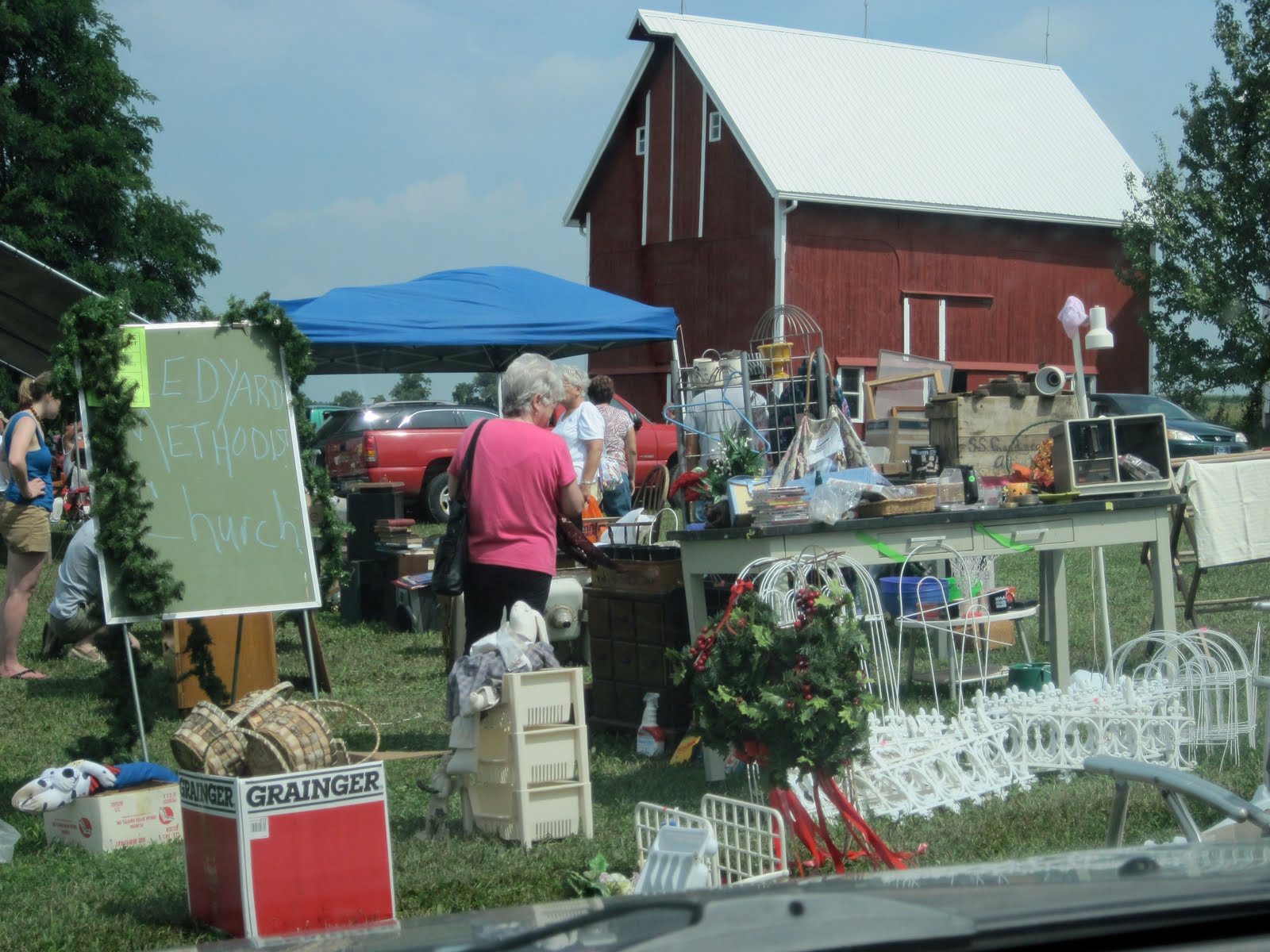
Marlene brought along some ice water, homemade tabouli salad, cucumber slices and homemade hummus for us to snack on. We took our time, enjoyed the beautiful day, saw some friends along the way, bought some fresh peaches and nectarines at an orchard overlooking Cayuga Lake, and had a good time. Here’s a picture of one place we stopped. I took it to show you the nice little barn in the background.

Of course, we found some great stuff along the way. Marlene’s best find of the day was a 1961 first edition, second printing, of Julia Child’s classic cookbook, “Mastering The Art of French Cooking.” It’s in great shape. She paid 50-cents for it and will probably sell it on Ebay (they typically sell there for $50 to $75).


I found a great book too. It’s titled How to Go About Laying an Egg, by Bernard Waber (published in 1963). Here’s a picture of the title page.


The book begins with “Rule 1: Make sure you are a hen,” and then proceeds to help you “decide whether or not you are a hen.”


It is a silly little book that people are paying $10 to $20 for on the internet. I bought it because of the chicken art. I’m sure my friend, Jax Hamlin, the chicken folk artist from Nonesuch, will love the book.


My best find of the day was a  strap-on, one leg milking stool...


There was no price on this simple, functional old tool and I asked an older lady at the sale how much she wanted for it. She asked if I was an antique dealer. I said no. I told her I planned it use the stool—that I was going to strap it on my wife so she could sit down while picking beans in the garden.


The woman said I could have it for two dollars. I didn't feel right paying two dollars. I gave her five.


The stool was made in Holland. I asked how long ago it was last used. She said they used it back in the 1940’s when they were milking 17 cows. But then they got a milking machine and didn’t need the stool. Today the farm milks 85 cows.


On the way home, while discussing our different sale finds, I asked Marlene if she would be so kind as to model the stool so I could show all my blog readers how it straps on one's rear end. She just laughed.


But I have strapped it on myself and I can tell you it is a very comfortable seat. The base of the leg has a spring that acts like a shock absorber.


Speaking of beans, here’s a picture of Marlene (taken by herself) after picking green beans on a wet July morning...


Breakfast in July

Yogurt with granola, topped with lots of just-picked raspberries (I guess you would call it a parfait, which sounds very French to me, but I do not find "parfait" in the Julia Childs book). That, along with a cup of coffee, outside on our patio, in our back yard, in the stillness of the early morning, here in the rural countryside where we live, is one of the best examples of “the good life” that I can think of.


Our raspberry canes have yielded very well and been such an enjoyable treat in this July now past.


In addition to the weekends, I’ve been home for such breakfasts two weekday mornings each week because I’ve been working only three and a half days at the prison job and the rest of the time at my Whizbang Books & project parts business.


Marlene and I have  also been spending a lot of time tending to the various needs of my ailing stepfather. One of those needs in July was to buy his house. We don’t intend to ever live there, but buying the place was the right thing to do under the circumstances. 

I can tell you that we would not have ever been able to do such a thing were it not for the relative success of the Whizbang business. And I can’t help but think what an awesome, sovereign orchestrator of events God is by providentially foreseeing the need and providing the financial resources for this purpose.


Land Update
It has been months since I announced here that we were probably going to buy 1.5 acres of field and woods right next to us. We had offered the owners an exceptionally good price for this section of their property. They accepted out purchase offer. We were thrilled at the prospect of doubling our acreage.


And then we waited... and waited... and waited. We waited a lot of months. Well, now the waiting is over. It turns out we are not going to purchase the land.


The owner has just re-listed the whole property (house, barn, and all the land) with a new real estate agent. At this point, we could re-offer to purchase the section of land, but we are feeling that we should not. We will just wait some more (we’re good at waiting) and see what develops.


They have put a high price on the property. Too  high, if you ask me. There are other, much nicer properties around us for considerably less. I will be surprised if it sells. They can come to us if they want to sell the section. We would still buy it—but not for the exceptional price we offered before.


So now we will do what we have always done, which is to say, we will do the best we can with what we have, right here where we are, while being content, and waiting (always waiting) to see what Providence has in store for us next. 


Update On The Planet Whizbang Garden Tote

Back in January of this year I showed you a picture of the wood and wire tote that I made. We have been putting that tote through the paces around here and I can report that it is a very handy homestead tool. It’s also has an attractive tool.


In the picture above, the tote has a variety of gardening tools in it, and even a sledge hammer. Hanging over one end are numerous wires that were used to make tire sidewall cloches which are part of my Whizbang Squash Planting Secret.


You’ll also notice a long-handled hoe resting on top of the tote (it rides there very nicely). The tote will carry all of those things comfortably, with room to spare, and I’m very pleased with the tote’s durability and usefulness.


That particular tote happens to be my 5th prototype; I made four different versions earlier this year and scrapped them all. After putting some use on this tote, I’ll make some additional minor modifications when I put together a final version this winter.


It is my intention to publish inexpensive, step-by-step directions for making these homestead totes. (Update 4/14: Plans for making the tote are now available at This Link)


Uncle Clyde’s 
Just-Published Memoir


My uncle, Clyde Kennedy, out in Ohio is 87 years old and, with the help of his children, has just published an autobiography of his life during the years of the Great Depression. It’s titled, The Hard Surface Road.


I read about half the manuscript around ten years ago (he has been working on the book a very long time) and knew then that Clyde’s experiences and recollections were an important historical chronicle of that difficult era—an era that precious few people alive today can relate to.


Uncle Clyde (who married my mother’s sister, Dawn, back after WW2) was a child during the Depression years but his memories of those days are clear and poignant.


There were no unemployment benefits back then—no food stamps—no social services of any kind to speak of. There was, however, family and families helped each other. But Clyde’s family on his father’s side, were one rough bunch of Eastern Ohio coal country moonshiners.

The book is dedicated to Clyde’s mother, Anna Statzer Kennedy. Chapter 1, titled, Homeless and Adrift, begins with these words:
The stubborn pace of time cannot erase from my mind how fate, in one of its bleakest forms, set our family adrift in the throes of the Great Depression. Born on the first of January in 1923, I was seven years old when the Roaring Twenties curled up and died. Dad lost his job, the bank foreclosed on our mortgaged house, and our good life vanished like a dream at sunrise. Dad’s brute strength, craving for work, and devotion to Mom kept our heads above water as we battled those cruel hard times. I wonder, though, what in the world would have become of us boys had it not been for our indomitable mother, who stood at the helm with her trust in the Lord.
If and when this book is published in a more affordable format, I’ll be letting you know about it here. You can learn a bit more about the book at this link.


The Next Depression....

Speaking of economic depression, the talking heads on radio (and probably television, which I don’t watch) are continually worrying about the economy. They are now suggesting that we may be headed for a “double dip” recession. That’s a laugh. A double-dip recession is mild compared to what is more likely in store for America. Double-dip recession is like a head cold compared to terminal cancer—with terminal cancer being the kind of economic outcome we’re likely to encounter.


Some people interpret such a prognosis on my part as much too negative, and pigeon hole me as a “doom & gloomer.” Well, I don’t consider myself that. I’m just a guy who has enough historical perspective to know we are not immune to collapse, and I understand pretty well the fundamental economic flaws inherent in our debt-money system.


I also know very well that human nature is flawed too. So we have flawed people trying to save a floundering, flawed economic system. It’s just not gonna happen. They can stretch out the inevitable, but not forever—and then what?


God only knows. But I can’t help thinking it’s going to be very, very difficult—primarily because we live in a civilization that, for the most part, has disengaged from the land, is not accustomed to hardship, and is so incapable of providing for its own needs.


There is sufficient reason to believe the upcoming economic crisis will be worse than the Great Depression (this short article provides some pertinent insights).


Faced with such a scenario, the question always arises... What about me? How will I and my family fare in an economic collapse?


None of us knows these things. But I can tell you this much... If you are living a lifestyle that is totally dependent on the government, the industrial providers, and/or your fiat-money reserves, you are in a dangerous position.


If you don’t have access to a debt-free section of land to live and grow food on, you are in a dangerous position.


If you lack the tools and hands-on skills needed for  self-sufficient living, you are in a dangerous position.


If you do not have a stocked larder, you are in a dangerous position.

If you don't have contingency plans for living without running water and electricity, you are in a dangerous position.

If you do not have a network of family and friends that you can depend on in difficult times, you are in a dangerous position.


If you lack the faith-based worldview needed to comprehend and accept the ugliest of scenarios, and to sustain yourself through them, you are in a dangerous position.


That said, it is my contention that Christianity, properly understood and lived, can sustain a person through any crisis he or she will ever face here on this earth—bar none—right to the end.


But I can also tell you that Christianity, properly understood and lived, tells it’s followers to sever their dependencies on the dominant world system. 

Precious few of those who profess to follow Christ seem to understand this. They limit their response to this biblical call for cultural separation because, frankly, they love their bondage to the world system—they have no desire to pursue the harder way of life that naturally follows the active pursuit of separation.


To a degree, I must admit to being among these “worldly” Christians—but only to a degree. The fact is, I have the tools, the skills, the land, and the spiritual resources to accept and deal with the coming adversity. I may not survive it, but I’m equipped to deal with it.


This is all something to think about as the myopic talking heads blather on and our government feeds us a continual stream of economic data skewed to make the situation seem better than it is (and that’s getting harder to do all the time).


A New Vision For 
The Retirement Years


I have read Gary North’s writings for a long time. In a recent essay titled, Two Bad Investments: Stocks, Bonds, North reiterates something he has been saying for many years, which is that your average person can not rely on conventional investments for financial support in their “retirement years.” In the recent article, after explaining why stocks & bonds are a bad investment, North states the following:
The average American has no pension. He has Social Security: a political claim against the future wages of people just like he is, only younger. His security is no better than Federal Reserve monetary policy, Congress's ability to persuade younger workers not to revolt, and his children's willingness to bail him out when the first two prove to have been false hopes.


The median net worth of Americans 55 and older is around $200,000. That was before the housing decline..... Think about this number. If a man is worth $200,000 at age 60 or thereabouts, or maybe $230,000 at 65, how much passive income will this generate at today's bank CD interest rate? Under $2,000 a year. So, he will have to sell his equity. But wait! The bulk of that $200,000 is the equity in his home – or was. So, he will have to sign up for a reverse mortgage. He will sell his house in stages.


The point is, if he lives for 20 more years, and his wife outlives him, they will be in poverty at death. He will have to sell at least $10,000 in assets each year to supplement Social Security. Inflation will speed up this process as the dollar depreciates.


His medical bills cost the government about $1,000 a month. Can you see why people hold placards at political rallies: "Don't touch my Medicare"? They are trapped. If they had to pay for their own medical care, they would be in poverty within a decade of retirement.


This is the reality of pensions and retirement. Yet the people on Tout TV do not tell listeners, "Sell your stocks. Start a home business. There is no way that you can retire in comfort with money in the stock market."


People want to believe that they can write a check each month and forget about the future. They delegate responsibility for their future to experts who get paid whether or not their investments pan out.


This is madness. It is universal.


Such reasoning from Gary North was like a kick in the pants when I read it years ago. It was a powerful incentive for me to begin a home business writing and self-publishing Whizbang books, and to start selling various project parts, while still working a full time “day job.”


I did not undertake my home business with fast money in  mind, I did it with my older years in mind. I also did it because I hoped it would eventually enable me to come home from my prison job.


I have no money invested in stocks or bonds. It is invested in inventory, marketing, new product ideas, and, hopefully, a good name in the minds of my customers.


My concept of retirement is not leisure and non-productivity. It is continued simple living and frugality combined with hands-on work and creative pursuits—but not working in a conventional job for someone else. Lord willing, I’ll be realizing this kind of retirement soon and will be productive at it for many years to come.


I’m telling you this because I think Gary North is right on with this idea—it makes incredibly good sense to develop a home-based business, with your retirement years in mind. You can read the above-mentioned essay and several other Gary North articles at this link.


In The Final Analysis

Unemployment. Inflation. Deflation. Recession. Depression. Societal collapse. Whatever. History marches on and you and I are not going to change the historical course.  It does no good to worry about outcomes. But it does us some good to respond wisely.


And to my way of thinking, the wise response is a deliberate and agrarian one. If there is a common theme to my writings over the past five years, this is it....

Humble yourself. Ground yourself in the spiritual sense (see above). Ground yourself in the physical, earthy sense so you can grow some of your own food. Stock the pantry. Eliminate debt. Downsize. Simplify. Make do and be content with less.  Learn the various hands-on skills of self-sufficient living. Establish one (or more) small home businesses. Embrace the little pleasures of life. Thank God for His blessings....

....Like, For Example, Tomatoes

Last year was not a good tomato year around here. There was a blight. It was very discouraging. But the tomatoes are looking better this year. 

Those four beautiful tomato fruits shown above are of the "Tommy Toe" variety. They are indeterminate tomatoes, which means they grow up in the air instead of bushing out, so you can grow them on a trellis.


Trellised tomatoes are easy to take care of and very satisfying to grow. Here's a picture of these trellised tomatoes...


That trellis section is 6ft long and 5ft 6 in. high. I planted three Tommy Toes in the span. The trellis structure itself consists of two t-posts, topped with two of my Whizbang T-Post trellis fittings (not yet available) which support a length of sumac tree trunk. 


Sumac is pretty much a weed tree and I cut it out of the hedgerow across the road from our house. This is actually the second year I've used that particular length of sumac to span t-posts. Strings are tied top to bottom for supporting the tomatoes and grass clippings around the bottom keep the weeds down.


I have let the tomato plants grow to about 6 ft high. Now I'll prune them as needed to keep them that height while the tomatoes start ripening (they ripen from the bottom up).


Another Kind of Trellis Structure


Marlene likes to grow morning glories. They are a flowering vine and I have come up with another Whizbang idea, which you can see in the picture above. I call them Trellis Triangles.


Trellis Triangles are little triangles designed to hold short or long lengths of dowel. You screw the triangles to your house or garage or barn. Then slide in a length of dowel and tie strings between the dowels. The strings support your climbing plant.


At the end of the season, simply snip the strings and leave the triangles with dowels in place for stringing again the next year.


As you can see in the picture above, you can attach a longer dowel to the underside of a soffit and fan the trellis string out.  I'll show you a picture of this same support next month.


Here is another view, looking down, from triangle support to triangle support, by our patio in the back of the house. The black you see is tar paper "siding."


I'll have more to say about these Trellis Triangles (Whizbang Trellis Triangles, that is) later this year. They are made of HDPE plastic so they're impervious to the rain and cracking and all of that, like wood would be.


One Last Barn

Probably the most remarkable old barn I've ever been in is at the Hancock Shaker Village in Pittsfield, Mass. Here's a picture of the outside.


==========


That's all for this month. Thanks for stopping by. I enjoy posting these monthly Updates and I hope you enjoy reading them. 

Best wishes,


Herrick Kimball

The June 30, 2010
Monthly Update Has Been Posted


As explained below, I am no longer writing daily blog essays here.  


But I am posting a single end-of-the-month update
for those who are interested...


This new format is something like a monthly "Blogazine." 

You can read the current "issue" at this link:


If you are new to this site...

Welcome To The Deliberate Agrarian!


After four years and hundreds of essays, I ceased writing
almost-daily essays for this blog in April of 2009. But my body of
past writings remain here as a relevant testimony to the wisdom
and goodness found in a Deliberate Agrarian lifestyle.

I invite you to peruse the Deliberate Agrarian Archives
(links are in the column to your right)

There is a wealth of down-to-earth inspiration 
and how-to information to be found there.
I also invite you to read my last essay before 
changing to a monthly format. Here is the link:


Yours truly,
Herrick Kimball
(hckimball@bci.net)


The Deliberate Agrarian Update
30 June 2010


June was another jam-packed month for me. My thanks to those of you who posted comments at last month’s update. I finally posted a reply there today. As for this here monthly posting, it will be shorter than usual, due to the fact that I put quite a bit of “blogging time” into getting the agrarian haiku poetry contest underway, and that is something I’m kind of excited about.....

Announcing The 
Deliberate Agrarian 
Haiku Poetry Contest 
For 2010


Yes, it’s official. I am sponsoring an online agrarian haiku contest. One never knows how this sort of thing will go over but I’m hoping it will be a real barn burner of a poetry contest.  :-)

There are three categories: Adult, Teen and Youth, so everyone can have some fun with this. I think it would be great if whole families got involved. The fact that I will be awarding a bunch (15 total) of surprisingly nice prizes makes it all that much more appealing.

Please stop on over to the contest web site. Here is the link: 


Whizbang Gets A Logo
.
I have operated my Whizbang Books mail-order business for ten years without a logo, but that is about to change, and so is the name of the business. I have decided that I like "Planet Whizbang" better and the image above—a leafy green beet surrounded by golden Saturnal rings—will be the official Planet Whizbang Logo. In the months ahead, I will be making the name transition.

And now, 
For something totally different.....


Marlene’s 
Television Sitcom Idea
.
.
A few days ago my wife told me she had an idea for a new television show. We no longer own a television but that is beside the point. This new program would be a situation comedy (a.k.a., sitcom). I'm assuming they still have these on television. 

Marlene told me it would be about a woman who is married to a man who is an inventor. He invented a machine that takes feathers off chickens. And he wrote a book about it.

That concept in itself was pretty funny and we were both laughing at the thought of it. But what made it even funnier was when she added that the book was a big seller. That was almost too absurd.

There was more to the plot... like quirky extended family members and so many competing demands on this woman’s life. The comic relief we found within this harebrained idea was a welcome respite in this month of June now past.

And as I got thinking about the television show idea, I started to get more of a vision for it. For example, here is a picture of the woman’s husband, the inventor/writer.


From all outward appearances the guy looks fairly normal but in reality he’s nuttier than a fruitcake. That smile belies a measure of felicitous insanity. What other explanation would there be for making his company logo a beet surrounded by golden Saturnal rings? And the guy’s business sponsors a haiku poetry contest?

As further evidence of this man’s slightly-unhinged state, I present his most recent invention...


Upon seeing that picture the usual response would be: “What is it?” Well, he calls that thing a Whizbang Bicycle Rim T-Post Trellis. These objects—several of them—are throughout the family’s garden, with beans and peas and cucumbers growing up the strings.


“They’re prototypes,” he says to his ever-patient wife while explaining the concept. She listens intently, sincerely trying to show interest and admiration, while wondering to herself when he is going to finish remodeling the upstairs bathroom he tore apart last winter.

Then, of course, the sitcom will need kids. How about boys. Three of them. One is in the Army in Korea. The other two, still at home, are teenagers. But not just teenagers, they are country-boys with testosterone-fueled redneck inclinations. For fun, they go “mudbogging” with the neighbor boys in their four wheelers.


And when they’re not doing that, they roam the surrounding fields with high-powered rifles, killing woodchucks.


And when they’re not doing that, they come up with good-fun ideas like hitching an old bed mattress to their screaming four-wheeler with a nylon tow strap and pulling each other around and around the outside of the house.... very fast... trying to roll the mattress rider off on the corners.

(sorry, no picture)

Or how about this: working together with those neighbor boys they build a big ramp at the bottom of a hill, on the edge of a pond, and take turns riding bicycles down the hill, as fast as they can, up the ramp, through the air, into the water.

(sorry, no pictures)

One boy does this with his glasses on and looses them forever to the murky bottom of the pond. Another looses his cell phone in like manner (they all have cell phones these days).

So then they get the idea of using another cell phone to call the one under water, thinking that maybe the ring will generate telltale bubbles (it doesn’t). But after some heroic diving, the phone is found, (and it still works just fine).

Things like that (and I’m just scratching the surface of possible script ideas) would, I’m sure, make for a very popular television program, don’t you think?

The woman in the sitcom is, if you get the idea, relatively normal, while everyone around her is not. But, if you ask me, normal is a subjective thing

I suspect that most every family generates sufficient fodder for a sitcom. Nevertheless, I can’t help but think that some aspects of my life are more bizarre than fiction.

Oh, one more thing... Our sitcom family will need a special dog. A yellow or red Blackmouth Cur would be nice, if you ask me. But the woman who is writing the script... she likes her beagle. Lucy is her name or, once you get to know her, you can call her Lu.


The Deliberate Agrarian Update
31 May 2010

Looking Back on May 2010
This farmer is working hard, making his hay while the sun shines.

I am busy. Incredibly busy. I’m putting tremendous effort into keeping up with the multiple demands of my mail-order home business, Whizbang Books. Making parts, keeping inventory in stock, filling orders, and trying to answer e-mail questions. I have never been this busy with this business before. I am close to overwhelmed.

The Lovely Marlene helps me by getting postage on the orders and in other important ways. For example, she keeps me fed, runs errands, and is spending a lot of time helping to care for my aged and very sick stepfather. So she is busy too.

Our boys are active teenagers, less inclined to help dad and more inclined to help other men—one is doing construction and remodeling work full time and the other works on two different farms. I see this as a good thing. They are learning skills, being productive, stepping toward independence. That is what I want for my sons. I couldn’t be more pleased.

If I really need them, they are there for me. Otherwise, I plod along. In time, one or more of my boys will, I believe, see the value of getting more involved in their father’s business. They could take it over. I would like that. In the meantime, this once-little enterprise is, as I’ve mentioned, something of a challenge to stay on top of. But I relish the challenge.

Deliberate Agrarian Haiku
Last month I posted a short poem that I wrote. It was about my head resembling a scrub brush. I like short poetry. So haiku is perfect for me. The rules are simple: Only three lines. Five syllables in the first. Seven syllables in the second. Five syllables in the third. No rhyming. That’s it. Here are four haiku poems I wrote in May. They aren’t profound. They’re just fun. And short.
Spring in my garden.
Hope and faith join the dark soil,
As I plant small seeds.
::::::
A hot summer day.
Mud oozes up between toes,
Swimming in the pond.
::::::
Fresh green timothy.
Stiff stalk stuck between my teeth.
Big smile on my face.
::::::
Mother made a pie.
Fresh strawberries and rhubarb.
Manifested love.

First Annual 
Deliberate Agrarian 
Summer Haiku Poetry Contest

Seeing as haiku poetry is so simple and can be so fun, I've decided to have a Deliberate Agrarian Haiku Contest. The contest details will be announced in next month's Update here. There will be age categories. There will be winners. There will be prizes.

You can start thinking about (and even writing) your haiku poetry now, to officially submit later. The haiku poems you submit must be original. They must celebrate the beauty of simple, agrarian life and culture in some way. Gardening, farming, farm animals, the natural world, and the joys of family life lived in close harmony in a rural setting are all possible themes. Poems that evoke fond memories of cherished rural rites (old and new) are good. My examples of  haiku poetry above give you something of an idea what I'm looking for. I'm sure you get the idea.

Amy’s Lasik Surgery

I have worn glasses since fifth grade, when the teacher realized I could not see the blackboard. I have never seriously considered getting Lasik surgery, and after reading of Amy Scott’s experience, I never will. She is now blind in one eye, and this is a must-read blog essay. God bless you, Amy.

The Difference Between Men and Boys
(Creating and Consuming)
Here we have a traditional man doing manly work. 
He is a capable, creative, active man.
This man is to be admired.

Have you heard of the Art of Manliness? It is a book and a blog, authored by Brett & Kate McKay. Though silly in places, the blog is excellent in so many ways. For example, a recent essay titled Modern Maturity: Create More, Consume Less presents some thoughtful insights. Here are some excerpts:
"Boys try to find themselves in what they buy; men find themselves in what they do. Boys base their identity on what they consume; men base their identity on what they create."
"Men have an inherent desire to be creators, to change the landscape, to turn wood into furniture, to transform a blank canvas into a work of art-to alter the world and leave a legacy. It’s the denial of this aspect of manliness that is perhaps most plaguing modern men. Young men are taught to think of life past 30 as a certain death, a time when they have to stop being selfish and live for others. The paradox that’s never talked about is that consuming is the real dead end when it comes to happiness. Your mind gets caught in an fruitless cycle-new experiences initially give you intense pleasure, but the more you consume of it, the more saturated your pleasure sensors become until you have to ratchet up the intensity and quantity of the experience to get the same “high” you used to. And the cycle endlessly continues.

But when you create instead of consume, your capacity for pleasure increases, as opposed to your need for it. Being a creator gives you a far more lasting and deeply satisfying happiness than consuming ever will."
Here we have a modern man amusing himself with cheap 
thrills and vicarious virtual accomplishments. 
This is an immature, helpless man. This man is to be pitied.
"The reason I frequently mention video games in connection with the problem of arrested manhood, is not the games themselves, but what they symbolize.

Whereas men once fought as soldiers, they now pretend to be ones. Where men used to play baseball and football, they now control avatars who play for them. Where men used to play an instrument, they now press buttons on a plastic toy. Where we once created, we now consume.

Why play a plastic guitar for hours instead of learning how to play the real thing? The answer of course it that doing the real thing is harder. Struggling with something tangible, something without a reset button takes dedication and commitment. So why bother?

The labor one performs transforms something in the environment, which in turn transforms you. The act of creation shapes you as a man, refines your sensibilities, improves your strengths, hones your concentration, and builds your character.
Creating can take many forms. The traditional ones are still some of the best: creating in your job, creating a life of love with your spouse and friends, and creating children. But there are other ways to create as well. Service to your community. Hobbies like gardening, blacksmithing, art, and music. Inventing, writing, blogging, political participation. Creating experiences for other people. Creating a spiritual life. And simply creating your character every day."
You can find your way to the article from which I’ve quoted at this link: Modern Maturity: Create More, Consume Less. And while you are there, I’m sure you will want to check out the rest of the web site.

Notes From The Garden

In the midst of unprecedented demands on my time, Marlene and I are managing to get the garden planted. She has nurtured lots of seedlings on the windowsill and then outside in a Whizbang Garden Cart, covered with clear plastic (a makeshift greenhouse).

We are eating spinach salads every day. Just-picked spinach leaves with walnuts, sunflower seeds, onion slices, strawberry slices, and dried cranberries. Drizzled on top is a simple dressing mix consisting of 1/2 cup vinegar, 1/4 cup honey, 1/2 cup olive oil and 1 tablespoon of poppy seeds. This is the kind of food we love.

I planted a patch of Winter Bloomsdale spinach and a patch of Space spinach. The Space (a hybrid from Johnny’s Seeds) is far and away the superior spinach. The Bloomsdale looks sickly in comparison to the lush Space. Both varieties were planted in the same soil at the same time, ten feet apart from each other, in the same wide-row bed.

I planted two rows of Alderman pea seeds in early spring when I planted the spinach and not a single seed germinated. These were new seeds from Territorial Seed Co. Very disappointing. I had visions of a full trellis of sweet shelling peas and .... nothing.

The Scarlet Nantes carrots and Early Wonder Tall Top beets (pictured above) that I planted in the early spring are doing very well. They survived a severe spring killing frost in late spring.

My hops plant, which I chronicled the growth of with pictures here last summer, has come up. It was sprawling across the ground in all directions. I pruned it and directed it up the strings of the trellis framework I made last year and it is growing just fine. The fastest tendril has already wound it's way around the trellis string 8 feet in the air.

Gazing upon my climbing hops plant, I mentioned to Marlene that Maybe I should start a grove of hops. I could sell the dried husks (or whatever you call them) on Ebay. She informed me that I have plenty to do already. Which made me think that I am much like a hops plant, wanting to sprawl out in a dozen different directions, and my wife is making sure I stay on course.

When I was little, and my parents had a garden in the back yard, I helped with the planting and weeding and harvesting. Back then I remember thinking, as I was working in the garden, that I couldn’t wait to get done so I could go do something that was more fun. Now, I find myself doing other work and thinking that I can’t wait to get done so I can go work in my garden, which I consider to be one of the "funnest" things in life.

I take my time, planting, weeding, thinning, and totally enjoying the process. To my way of thinking, it just doesn’t get much better than working in the garden.

Olive Oil

Marlene uses olive oil almost exclusively when cooking and baking. She buys it at a Greek store in Syracuse, NY called Samir’s Imported Foods. She says the store is little and packed full, with narrow aisles and barrels of different kinds of olives (strong smelling). There are dates and figs, glass jars of nuts, and other Mediterranean foods. She buys several gallons at a time of the inexpensive, low-grade olive oil to use in her homemade soaps. But for us to eat, she buys a much higher grade of olive oil.

If you want to know what makes for a good olive oil, ask a Greek grocer. As you might expect, he will tell you that Greek olive oil is far better than olive oil from Italy or Spain. Besides that, there are three things that you need to look for. First, it needs to be “Extra Virgin.” Second, it should say “First Cold Pressing.” Third, it should have low acidity.

The sooner the olives are pressed after picking, the lower the acidity. The lower the acidity, the smoother the flavor. Higher acidity olive oils are bitter. “You can feel it in your throat,” the grocer says as he pinches the skin over his Adam’s apple between thumb and forefinger and tugs repeatedly.

Many olive oils do not list the acidity. But some do. The olive oil that Marlene buys (on the recommendation of the Greek grocer) says: “Acidity=0.0%—0.5%”

At the web site for the olive oil we use (pictured above), there is a short blurb about the Mediterranean diet. I like the sounds of it:
What is the Mediterranean diet?
Over time, the Mediterranean population, in which olive oil plays an integral role, has shown a much lower incidence of diet-related diseases, such as heart disease and breast cancer, than North American and Northern European populations. So what do the people of the Mediterranean typically eat? Their diet is based on fresh fruits and vegetables, legumes, nuts, breads, pasta, potatoes, a wide variety of grains, fish and olive oil. Red meats and wine, both in moderation, round out the diet dubbed "Mediterranean" by nutritional experts. In the "Mediterranean diet," olive oil is the principal source of fat.

Reflections On My Home Business
My Planet Whizbang Wheel Hoe
 
This blog is pretty close to five years old. It has been a continuing chronicle of my life. Along the way, I’ve introduced readers to my various down-to-earth entrepreneurial ventures. As a result, many of you have purchased books and project parts from me. I am grateful for this. But my purpose here in mentioning my home business has been twofold.

Besides the marketing value of telling you about such things as homemade chicken pluckers and homemade cider presses, there is the inspirational value. Which is to say, if I can develop a small home business and bring it to a satisfying level of success, then there is a real good chance you can do the same, if you so desire.

The internet presents us common folks with an incredible opportunity to compete in the free market, especially with narrowly focused niche products—and on a global scale. Developing a successful mail-order business to sell your ideas, your knowledge, your crafts, and other products is doable like never before in history. For someone living in a rural area of the country, it can be an ideal way to bring in needed income.

I’ve found that it is possible to create an online web presence using the same blogger.com format that you are reading this blog on—for absolutely no money! All my business web sites are in the Blogger format. Check out www.WhizbangCider.com for example.

My only investment with such sites is the yearly cost of the unique domain names. Blogger will assign you a unique domain (URL) for free, but it will be longer and harder to remember than your own simple URL. For example, the Blogger-assigned URL for www.PlanetWhizbang.com is http://planetwhizbang.blogspot.com/. It’s easier for people to remember just PlanetWhizbang.com

So I simply purchase the domain name I want from www.GoDaddy.com. It takes a few minutes and a few clicks, and a few dollars (less than $10 a year) to buy a domain name at GoDaddy. Then I adjust the GoDaddy settings to direct people to my blog when they go to www.PlanetWhizbang.com

That’s how, for example, I am able to create web sites with my own domain name for less than $10 a year. And making changes as needed to the sites can be done very easily and quickly using the Blogger.com format. I once spend several hundred dollars to have a web site made by a pro. It was nice but I can do just fine making my own Blogger.com web sites. You can do the same.

Furthermore, it is possible to add PayPal ordering buttons to your blog/web sites. It costs nothing to do and PayPal takes a fee only when someone buys something.

This is my  Whizbang workshop in May 2010

The fact that I am doing what I am doing with my Whizbang business, working out of my home, and a small, very crowded, garage-size workshop is nothing short of amazing to me. People who visit are completely underwhelmed at my operation. There is nothing impressive about the International Headquarters of Whizbang Books. Mine is a simple, low-budget operation, yet it is prospering.

Now, having said all that, I must quickly add some more details: First, I have pursued and failed at previous entrepreneurial ventures.

Second, the measure of success I am now seeing has been a long time coming. I started by publishing 100 copies of a chicken plucker plan book at a copy shop ten years ago. Since then, the business has grown slowly—one step at a time— as I’ve reinvested profits, while working a full-time factory job to support my family.

My initial investment of less than $1,000 (to get the book printed and mailed off to some magazines for review) has been the only “upfront” money I’ve spent. I haven’t borrowed a cent. No debt.

Third, I have invested countless hours of my “spare time” into developing this business. I don’t watch television. I don’t golf. I rarely travel. I’m a homebody, and when I’m home, I’m focused much of the time on this business. But the nice thing about my business is that its related to home-centered ideas and activities, which I involve my family in. And when I’m home, I’m here for my family. This is important to me. If this business required me to be away from my home and family, I wouldn’t do it. That would defeat the purpose.

Fourth, God has blessed me in this business. That may sound trite to some, but I am very serious when I say that I did not achieve anything of significance apart from Him imparting to me this small measure of success that I so richly do not deserve. I am ever-cognizant of that and continually thankful for the blessing.

The success of this business has been my heart’s desire, not because I want a lot of money, but because I want to come home, live simply on a section of land (a little bigger than the 1.5 acres I now have would be nice), and work with my hands, crafting and creating products, providing for my family from the land and a cottage industry. It is also my desire to provide an example of godly, home-based entrepreneurship for my sons.

As dreams of success in this world go, mine is really very simple. But, ten years ago, it was a distant and unlikely dream—more so than you might think. Now it is remarkably close to reality. Nevertheless (and here is the important part) my modest but tangible success in this Whizbang endeavor could slip from my grasp in short time. I'm no "name it and claim it" prosperity gospel guy, confident that God owes me material success. Not at all.

Rather, my attitude regarding this subject (and so much else in life that comes and goes—including life itself) is summed up in the attitude of Job in the Old Testament. We are all, to some degree, a Job. He knew success and failure. He enjoyed good health and then terrible sickness. And, as God’s servant (so-called by God Himself), Job knew his place in this world. Two verses from the Book Of Job, which are words spoken by Job, are foremost in my mind. I do not echo these sentiments in some dismal acceptance, expecting the worst to happen to me at any time, but in humbleness and thankfulness, with the assurance that God is in control and, as one of the "sheep of His pasture," he will not leave or forsake me. That assurance is worth far more than any material prosperity.


The LORD gave and the LORD has taken away;
may the name of the LORD be praised. 
Job 1:21 (NIV Bible)

Though he slay me, yet will I trust in him... 
Job 13:15

Rambling About Oil & Creation

With untold thousands of barrels of crude oil spewing uncontrolled into the Gulf of Mexico it occurs to me that our highly industrialized, oil-dependent civilization is unique in the history of the world for the unprecedented destruction it has inflicted (intentionally and unintentionally) on the earth.

That being the case, it is worth reminding ourselves why the corporations of the world plunder, poison and destroy creation. The bottom-line reason is to make a profit for their shareholders.

As a Christian, looking at such issues through the lens of my biblical worldview, I cannot help but be opposed to malevolent technology and the wanton, unsustainable appropriation of God’s creation. Yet, when all is said and done, I’m afraid I’m in the minority (once again). Most who call themselves Christians are, truth be told, comfortable with creation-destroying technology.

Oh, they are as dismayed as anyone at environmental disasters. But they believe that we in the industrialized nations of the world must maintain our unprecedented high standard of living (and consuming) and continue to grow the economy. These objectives are higher on the list-of-important-things-in-life than is responsible stewardship of creation. After all, they might reason, didn’t God give us the earth to use as we see fit?

Well, no. I’m quite certain He did not. And I’m also pretty well convinced that any technology that ravages God’s creation (anywhere in the world) is immoral, which is another way of saying, “sinful.”

This kind of attitude is enough to get you labeled a liberal, left-wing environmental wacko (which no God-fearing modern American fundamentalist Christian would ever want to be mistaken for) except that Liberal Left-Wing Environmental Wackos don’t usually take God and his word (the Bible) seriously. Alas, there is no pigeon hole for conservative, right-wing environmental wackos. That’s an oxymoron, or so it would appear, to the multitudes of mainstream, world-compromising, modern-Christians.

I ask you.... Does the ends (profit and prosperity and a high standard of living) justify the means (creation destroying technology)? Of course not. That is the deluded, arrogant mindset of our neo-Babylonian civilization.


There is an interesting verse in the Bible that gives us some insight into what God thinks of all this. You may recall that when He finished creating the world, as told back in Genesis, God proclaimed that it was good. In other words, He was pleased with his creation. It is therefore only logical to conclude that destroying God’s good work is an affront to Him. And this is exactly what we discover in the last book of the Bible (Revelation 11:18). There we find talk of judgment. “Those who destroy the earth” are mentioned...

The nations were angry, but the time for your wrath has come. It is time for the dead to be judged- to reward your servants, the prophets, the saints, and all who fear your name, both unimportant and important, and to destroy those who destroy the earth.

I realize that there are no mainstream preachers saying anything about this. And I wonder why not. But of course.... they wouldn’t be mainstream preachers any more if they did.

Clearly, all of us in the industrialized nations share in the destruction because we use the many products of the destroyer-corporations. But I think there is a difference between using the products and profiting from the destruction. That isn’t to justify profligate consumption. On the contrary, this subject should give us all pause when we make lifestyle choices and purchases, or so it seems to me.

And before you stone me verbally for my hypocrisy, I understand that I am profiting from the destruction when I operate a company that sells products made using raw materials that come from big corporations that destroy the earth (i.e., plastic). Yes, in a roundabout way, I am guilty. I admit it. It is this realization that leads me to my concerns.

Frankly, I don’t know how to “fix the problem.” In the end, my answer is to do as I have advocated here for years— Live simply, consume less, grow and make more of my own needs, reduce my dependencies of the Babylonian civilization I live within (step by step), and responsibly husband the land I have been entrusted with.

John Seymour’s Thoughts

John Seymour (1914—2004) was an advocate of simple, sustainable, responsible, living. I’ve not read any of his books but I happened upon an essay of his titled, The Age of Healing, and I liked much of what Seymour had to say. Excerpts are below, and a link to the essay at the end.

Upon reading John Seymour’s biography (on the same web site as the essay) I learned that “his ideas for a better way of life... included 'distributism', a movement championed by Hilaire Belloc and G.K. Chesterton.” I’ve mentioned distributism in this blog before. It is a little-known economic and social philosophy that is, to a pleasing degree, biblical and agrarian. It has been promoted mostly by followers of Catholicism, so most Protestants (of which I am one) tend to dismiss it offhand. But I'm of the opinion that Protestantism and distributism are not mutually exclusive. Distributism is well worth understanding and you can get a basic introduction at This Wikipedia Page.

Here is John Seymour:
"The Age of Plunder was the natural successor to the so-called Age of Reason: the Age in which humankind decided that it knew better than God. For 200 years now the greedy and ruthless have been plundering the planet but their time will soon be up. The whole thing is going to come crashing down.

It could not have gone on much longer anyway - because soon there will be nothing left to plunder. The forests have almost gone from the Earth, the fish of the sea are all but exhausted, the air surrounding us and the waters of the Earth will soon be able to take no more poisonous wastes and, most serious of all, the soil is going. For we soil organisms this could be terminal. As long as the oil reserves last agribusiness will be able to produce the agrichemicals needed to keep some sort of production of vitiated food going from the eroded soil, but the oil deposits - that Pandora's Box of evil things - will soon be exhausted and then the final account, long deferred, will come up for payment. The bailiffs who present it will have strange names, like Famine, Pestilence and War.

But, thank God, maybe the old Earth will not have to wait for this to happen. The whole great edifice of international trade and finance - the whole mighty plunder-machine - is quite likely to burst like a balloon that has grown too big. The whole thing is becoming unsustainable: it has grown too huge to manage.

Owing to the incorrigible tendency towards cannibalism by the huge industrial corporations - the tendency of the bigger ones to swallow up the smaller ones - these molochs are becoming too large for humans to control or the planet to support. Ten years ago no economist would have predicted the complete collapse of the mighty Soviet machine that had engulfed half the Earth. International capitalism will follow.

It is in the nature of a limited company that it can have no responsibility either to the environment around it or to the people who work for it. It is no use blaming the directors - if they do anything that might reduce profits for the shareholders they will quickly be replaced. And the shareholders not only have no liability for debts incurred by the company - but they take no responsibility for the world of nature around them. If the directors can secure bigger profits by dumping poisons into the nearest river - they have to do this. If they do not, they will very quickly be replaced. If they can make more profit by halving the work force - they will have to do so or again they will be replaced. If both shareholders and directors suffer from that most uncapitalist thing - a conscience - to the extent that it interferes with profits - that company will be swallowed up by another giant that has no such inconvenient scruples.

One of the most dramatic effects of the Age of Plunder has been to drive most of the world's population into vast conurbations. These huge assemblies of uprooted people, called cities, are not only ugly but also dangerous. The billions who live in them can only be kept alive by an enormous system of transport which brings water, food, power, fuel and all the necessities of life, often great distances. Any breakdown in the supply of all this would be disastrous. And the great plundering molochs of companies which run it all get fewer and fewer, and bigger and bigger, and more and more people find themselves out of work, not needed, redundant and disempowered.

And meanwhile the tiny scattering of people left on the land, which is the only source of true wealth, have been forced by their paucity of numbers to resort to more and more destructive methods of producing the huge amount of food needed to sustain these billions. They have been forced to ignore the laws of husbandry, which could have retained the fertility of the soil as long as the world lasted, and farm instead with chemicals and huge machines. The soil is becoming poisoned and eroded. The only beneficiaries of this have been the huge chemical companies but they will destroy themselves in the end because they are killing the goose that laid the golden eggs."
"Refuse to work for the plunderers. Refuse to buy their shoddy goods. Give up the ambition of living like a Texan millionaire. Boycott the Lottery, not because you think you won't win it, but because you don't want to win it!

Refuse to shop in the plunderer's "supermarkets".

Work, always, for a decentralist economy. Support local traders and producers - try to get what you need from as near your home as you can.

Take part in your local politics - boycott the politics of the huge scale, the remote and far-away."
You Can Read John Seymour’s entire essay at THIS LINK

A Day On The Cheese Trail

The Finger Lakes region of New York state where I live has, in recent years, become notable for it’s wine. There were no wine makers here thirty years ago. Now there are many. So many that they have a “wine trail.” People can get a map and go “vineyard hopping” along the trail. Marlene and I have never done that and don’t have a lot of interest in it. But when I heard that there is now a “cheese trail”.... well, that’s something different. Micro dairies and artisnal cheese-making appeal to my sense of agrarian rightness and goodness.

This Link tells about the Finger Lakes Cheese Trail. Day before yesterday was the first of three cheese-trail open houses scheduled for this year. Seeing as We’ve been so doggone busy with this Whizbang business and so on, Marlene and I decided to take a day off and hit the cheese trail. We only went to three of the dairies, but we had a great time stopping at every garage sale we came to along the way (and there were a lot of them).

Our most enjoyable stop on the trail was Finger Lakes Dexter Cheese Creamery. I think they are currently milking six Dexter cows and they make a probiotic kefir blue cheese that is absolutely remarkable (it is pictured above). Their web site describes the cheese as “ooey-gooey rich and pungent, zingy, saliva popping Kefir blue!!!” That pretty much sums it up. The cheese is alive! 

The Dexter

Marlene and I are fans of the Dexter cow. They are a traditional homestead meat and milk animal. You can read about the breed at the Dexter Creamery link above. If we ever get ourselves enough land, we would like to raise a few Dexter cows.

James Madison Gets The Final Word This Month

James Madison, fourth president of the US (and a pre-industrial-era, pre-14th-ammendment-corporation Virginia farmer) said the following:

“The class of citizens who provide at once their own food and rainment may be viewed as the most independent. It follows that the greater proportion of this class of the whole society, the more free, the more independent, and the more happy must be the society itself.”

I couldn't agree more, Mr. President.