In Praise of John Stewart Collis


There are a lot of agrarian authors for agrarian-minded readers to choose from. Gene Logsdon and Wendell Berry come to mind immediately. Joel Salatin, John Seymour, E.P. Roe, William Cobbett, Liberty Hyde Bailey, and even Henry David Thoreau also fall into the category of popular agrarian writers. Were I to ponder further, I’m sure I could come up with many more names but, at the moment, I’m too enthralled with John Stewart Collis to give mind to any others.

I discovered Collis’ book, The Worm Forgives The Plough, in the best way.... by “chance” at our local library's yearly used book sale.

Marlene and I took numerous boxes of books to the sale this year. They were from my mother and father’s house, which, since the passing of my father, we are trying to clean out. My mother loved to find good old books at yard sales and she loved to show them to me. I’m much the same way. The nut doesn’t fall far from the tree, eh?

But I’m trying to reform my ways. To cut back on my habit of bringing home far more books than I will ever read in my lifetime. So I told Marlene very specifically that we were going to drop our donations off and I would not spend any time browsing the many tables. But I lied. It was too much of a temptation. 50-cents for any paperback!

Thus I discovered The Worm Forgives The Plough, and I couldn’t be more pleased. The book, published in 1973, is actually a compilation of two books that Collis wrote in the late 1940s. They consist of a series of essays that are recollections from the years Collis worked as a farm hand in England during World War II.

John Stewart Collis was not born to farm work but he was a willing student. And it so happens he was a student of rural life and ways when farming was still done much the same as it had been done in England for centuries prior to the agricultural industrialization we see today. As Collis states it in the Preface...

"This book was written just before both the corn-rick and the hay-rick were deemed unnecessary by modern methods. The change of scene followed rather swiftly. Thus this book is about the last of its kind that can now be written in England."
 .

In the postindustrial era that lies before us, I believe we will see a return to traditional ways of farming. With that in mind, The Worm Forgives The Plough provides a glimpse into what farming will be more like in the days ahead.

But a more important reason to get this book is that, if you like to read of the old rural ways of life, you simply will not find a better book. John Stewart Collis is a remarkably good writer. His memories, his observations, and his opinions of those years he spent working the land are expertly crafted and a pure delight to read.

One of the things I especially like about Collis' essays is that they are honest recollections; he does not romanticize. He tells the truth about how dull and brutally hard farming could be, but there is beauty in such a life and he captures that too. The following essay (slightly shortened by me) is an example of what I like about John Stewart Collis.

Before you read the essay I want to make sure that you understand the old meaning of the word “corn” that Collis uses. When he speaks of “the rising corn” he is not talking about corn on the cob, or maize. He is speaking of growing seeds. Check out this definition of corn from Webster’s 1828 dictionary for a more precise definition.


—:::—


The Third Day of Creation
By John Stewart Collis

A fortnight to three weeks having elapsed since I broadcast seed with Arthur, I decided to have a look at that field. ... 

On approaching the field I saw a low green mist clinging to it, which turned out to be substance in the nature of grass, now covering what had been the brown surface of the field. I dug up a spadeful. We had sown a mixture of oats and peas. Those handfuls of round and oblong caskets that I had helped to broadcast, had performed a peculiar act after leaving the hand and reaching the soil. Quite dead in the sack, it had seemed; but on touching the soil they had become animated, alive, and full of surprising moves. It were as if that little oat-seed, a tiny and inferior-looking piece of matter such as one might chip off a log, had been galvanized on being touched by Earth—making me think of gunpowder when touched by Fire. The envelopes had exploded. The pea seeds, those hard little balls like dented miniature ping-pong balls, had softened and shot downwards white webs and claws as long as my fingers, and shot upwards into the air a complicated system of green tubing and frills. The oat seeds, the shape of tiny fish, had performed a similar feat below and had sent up into the air long thin pieces of material like green ribbons. No matter how they had fallen on the ground or how they lay when they had fallen, they had all exploded in two directions only—down and straight up. None slanted, all persevered the perpendicular.

We glorify the present only when it has become the past. This is a recognized tendency in terms of history. It is equally true in terms of metaphysics. We imagine that Creation took place in the remote past. No doubt it did; but the same thing takes place today. The Third Day of Creation, as fabled in the book of Genesis, happens once every year no less certainly than the Sixth Day happens all the time. If this were not so the world would speedily dissolve. As I stand beside the rising corn I feel no need to have been present on the Third Day of the First Week, since I am witnessing the same thing. The same Force is at work, the same Voice obeyed. That which I would have seen then, I see now—sheer miracle, pure purpose. He who tries to dispose of this, uttering some mumbo-jumbo about ‘chance’ or ‘mechanism’ is the only real heretic, the only real atheist. All other denial, all other unbelief is mere speculation, and of no consequence. But this denial of clear witness is not speculation, and reveals the denier, not as a clever casuist, but as a stupid ass.

I have spent some time in the company of the philosophers and the priests, and have taken long journeys with them in search of the Absolute. It was all necessary. For only then could I understand that it was not necessary, and if we will but look out of the window the answer is there. It is clear to me now that if we take the trouble to regard phenomena, with the eye, not of a child, but of an adult who weds intelligence with wonder, we shall soon find ourselves at ease with The Problem of Purpose and all the rest of it.


—:::—

The Deliberate Agrarian Blogazine
July 2011

Dateline: 31 July 2011


July was the month for fresh raspberries around here. Marlene and I picked berries almost every day for three weeks. We heaped them into our morning bowls of oatmeal and drizzled maple syrup on top. A great many packages of just-berries are now in the freezer.

My 5-month hiatus from blogging continues.... 


Well, sort of.....

I want to express my sincere thanks to those of you who commented at last month’s blog post about the death of my stepfather.

Since then, we have been focused on dealing with all those things that  must be done to settle an estate. We have met with the attorney, an auctioneer is scheduled to come and cart away anything of value, and we have sorted through a lot of stuff. I will be very glad when this chapter of my life is over.

Going through the family papers of my stepfather has been a revelation, especially the letters and pictures of his parents. The remaining ephemera of their lives is all packed into a couple of cardboard boxes. I knew almost nothing of these people, and now that I do, I feel compelled to briefly share their life story with you...

.
One Family’s Story
.
A young Marion Andrews with her father, the Rev. George Wakeman Andrews. The Rev. was a Congregational  minister in Dalton, Massachusetts for many years, and a man of some acclaim. He was a director of the Massachusetts Total Abstinence Society and the Anti-Saloon League. The book page with inscription (click the picture to enlarge) was evidently saved by Marion all her life. One would assume the page came from a Bible, but only the page (and the fatherly advice) survives.

Marion Andrews (above) was my stepfather's mother. She was born on April 1, 1899.

 My stepfather’s father, Earl Murphy was born in 1901. He was actually born Lawrence Vincent Fitzmorris. His mother died of medical complications a few days after his birth and, unable to care for the baby, his father dropped little Earl off at the home of one of his wife’s relatives in Charlemont, Massachusetts. They renamed the child Earl Lawrence Murphy and raised him as their own. This was done without any government notification or social services involvement. 

Earl learned of this story and his unoffical adoption after he was grown and had trouble getting a passport.

Earl Lawrence Murphy as a boy in Charlemont Massachusetts.

This next picture shows Earl and Marion around college age. We don't know how they met.


Marion Andrews and Earl Murphy circa 1921

Marion graduated from Wheaton College and Earl from Boston University. They were married July 31, 1926 (a month after Earl’s graduation) at St. Paul’s Cathedral in Boston.

In this next picture we see Earl and Marion shortly after they were married. Earl was a tall  (6’2”), good looking man. He found work as a traveling textbook salesman and did that for 26 years. The couple soon settled into a nice home at 60 Garfield Street in Springfield, Massachusetts.


Earl and Marion Murphy circa 1927. Marion called Earl “Jack.”

In December of 1929, their first child, David, was born. Later in her life, Marion compiled a chronicle of her and Earl’s life together. The highlights of each year, from 1926 to 1960 are in a 5” by 8” spiral notebook. The way the excerpts are written, I would guess they were transcribed from journal entries. In the notebook for 1929 she describes David as “Our lovely baby—all golden curls at three months—happy and a joy.”

Marion, David, and Earl, circa 1930.

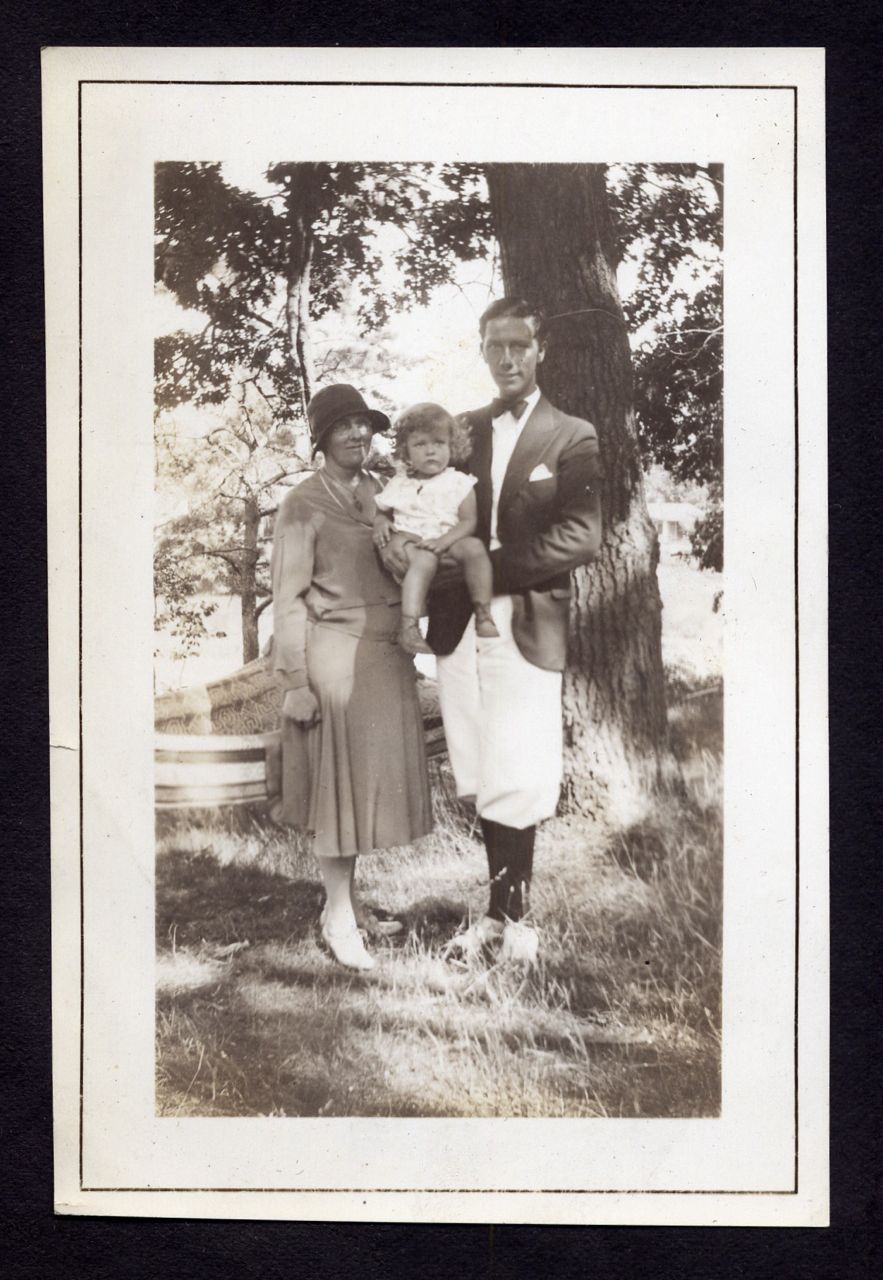
My stepfather, Richard, was born in December of 1931. It appears that the Murphys got through the Great Depression without much difficulty. They even went on a European cruise in 1934, touring Germany (Adolph Hitler became Furher in 1934), Austria, Switzerland, England, and France. They put together a detailed photo scrapbook of that trip, and others they took. In this next picture we see the happy family. 


The Murphy Family, circa 1939. Richard, Marion, David, and Earl

In April of 1949 David died suddenly of a heart attack while a student at the University of Massachusetts. He had just won a music scholarship to Syracuse University. Two months later, Earl wrote a reflective three-page synopsis of his son’s death, the events that followed, and his feelings. Here are a couple of excerpts:

“It’s surprising—or perhaps it isn’t—what a hole it makes in our lives. I guess Dave was all tied up with our hopes and dreams. He was doing so very well. He was smart, popular, seemed healthy, was doing excellently in everything at school. We had such hopes for him.”
“David is lucky. He will never live to have his dreams inevitably changed by time nor feel the sorrows that are a component part of even the happiest mature lives. He was sitting on top of the world and was very happy....He was a joy as a son. He was bright, companionable, clever, and had a delightful sense of humor. I think I miss more than anything else our little jokes together...”

The Murphy family received over 700 cards and letters of condolence after David’s death.

Marion and Earl were educated, erudite, and cultured people. It appears that David was much the same as his parents. But Richard, my stepfather, was none of those things. Among the old papers are carbon copies of letters from Earl to his rebellious second son during the boy’s late teens and early 20s. They reveal great distress about his fast lifestyle, excessive drinking and disrespectful attitude.

After a stint in the Marine Corps came Richard’s first marriage and a divorce. His two young sons ended up in foster care for awhile. Earl and Marion were heartbroken. There is sadness heaped on sadness in the story of this family. And it gets worse.

Judging from the photos, you would think that Earl and Marion really had their lives together, but some of the surviving letters reveal a different story, especially later in life. Earl, a drinker from his youth, evidently became an alcoholic. In one letter to Marion, Earl apologizes for his drinking and his “hedonism.”

On top of this, the family experienced economic hardship (which Earl blamed on his irresponsibility) in the late 1940’s. It appears that Marion came to the marriage with some financial resources but, in time, they had dwindled significantly. 


Earl left the sales job and managed a hotel. Marion helped him in that job. They rented their house in Springfield out to another family. Then Earl got a job as director of public relations for Goodwill Industries in Springfield.

There was marital stress and a separation for a little while. Then, in 1958, at 57 years of age, after a couple of unsuccessful surgeries, Earl died of rectal cancer. Marion struggled on, working as a house mother at a college dormitory, before dying from a stroke in 1962.

When I told Marlene that I was going to briefly tell the story of Earl and Marion, she said, “But it’s not a happy story. It’s so sad.” That is true, and I haven’t even told you what I consider the saddest part of all...

Conspicuously absent from Earl and Marion Murphy’s many letters is any indication that they had a sustaining religious faith. They were actively involved in a large Methodist church for practically their entire married life, and it is evident that they were very social people, but there is not one iota of evidence at all in their personal writings that their Christianity had any depth; that it was anything more than a skin-deep “Churchianity.”

It appears that Earl and Marion were so close, yet so far away from the wellspring of hope, peace, and spiritual strength that a deep and abiding faith in Jesus Christ as Lord can and will bring into a life, no matter what the circumstances. That is, to my way of thinking, the ultimate sadness in this story, and it is all the more poignant when you consider that admonition from Marion’s “Papa” on her 9th birthday...“Search the scriptures.” 


###
.
I should note that the story for Richard got better. He settled down, ended up marrying  my mother, and they had a good marriage, though they had their share of difficulties. My mother matured into a godly woman who did search the scriptures. It made all the difference in our family and in my life. I'm thankful for that.


Reflections 
On The Purpose Of Life
.

Marion Murphy's spiral notebook, open to the date David died, is in the center of the picture. Adjacent to that is a letter from Earl to Marion shortly after they were married (He begins it: "My dear little wife,"). Earl's obituary is to the right. A larger picture of Marion is at the upper right. David is pictured in the center. (click to enlarge)

When you die, and the record of your lifespan is reduced to some papers in a box, what will be the story those papers tell to those you left behind? Will your children and grandchildren be blessed, inspired or encouraged by such a legacy? Or will they be saddened by it? That is the question I am asking myself these days.

One thing is for sure— life is short. If you live to be 100, life is still short. Generations come and generations go. We all play our bit part (and everyone’s life is only a bit part) in the grand history of the world. Then we are gone. We may be remembered fondly (or not) in the hearts and minds of some who knew us, but only for a short season. In time, they will be gone too. If a picture of you happens to survive more than a couple of generations, anyone who sees it will look at you as a stranger.

The prophet Isaiah stated this all very well in the Old Testament:


“All flesh is grass, and all the goodliness thereof is as the flower of the field: The grass withereth, the flower fadeth: because the spirit of the LORD bloweth upon it: surely the people is grass.”

All of this could be an inducement to melancholy, but only if one were not cognizant and attuned to the highest purpose of all human life. Unfortunately, very few people in this world know this highest purpose. Even less understand it, believe it and take it seriously.

The answer to this great question of man’s being (like the answers to so many other great questions) is found in the Bible, and the essence of it was beautifully distilled into a simple question and answer by a group of Christian scholars 354 years ago.

Millions of youngsters once memorized the first question and answer of the Westminster Shorter Catechism in the years since it was put together (1647). It was widely known and understood in early America (when we were a Christian-agrarian nation). The Pilgrims and the Puritans knew it well.

Nevertheless, it is a rare modern Protestant evangelical that is familiar with the Westminster Catechism. Personally, I’ve attended a variety of evangelical Protestant denominations since I was a teenager and never recall ever hearing of this catechism, or, for that matter, any catechism.

Perhaps you are like I was. If so, let me introduce you to it...

Q. 1: What is the chief end of man?
(this question is also phrased, “What is the primary purpose of man?”)

A: Man’s chief end is to glorify God, and to enjoy him forever.

That answer is the key to living a “successful” life; to playing your part well in the history of the world. There is no room for philosophical confusion and melancholy in this foundational doctrine of Christianity.

Implicit in this matter of glorifying God is an attitude of humility before Him, and submission to his laws. According to the Puritan preacher, Thomas Watson (1620-1686), glorifying God “consists in four things: 1. Appreciation, 2. Adoration, 3. Affection, 4. Subjection. This is the yearly rent we pay to the crown of heaven.”

There is, of course, more to this subject, and I dare say it all boils down to Papa’s advice (see above)... “Search the scriptures.”


One Pastor’s Sorry Example
.

NASCAR preacher

We can oftentimes understand better what something is by observing an example of what it clearly is not. That said, you can see a remarkable example of not glorifying God by listening to the above pictured Baptist pastor’s recent invocation at a NASCAR race in Nashville, Tennessee.

CLICK HERE to see an example of not glorifying God

God is in no way, shape or form glorified by that pastor's performance. His public prayer served to bring glory to himself. When you use prayer to amuse, to entertain and to advertise products, you make a mockery of God and the Christian faith. This example of apostasy brings to mind Neil Postman’s excellent book, Amusing Ourselves to Death, in which he states...


“I believe I am not mistaken in saying that Christianity is a demanding and serious religion. When it is delivered as easy and amusing, it is another kind of religion altogether.”


On The Other Side Of My Family

Among my mother’s papers were a couple of old photographs I had never seen before...


(click to enlarge)
 

That picture looks like it was taken in the front yard of my Great Grandfather Elias Moses Philbrick’s farmhouse in Easton, Maine. My grandfather, Percy Philbrick, is in the center and my grandmother, Gertrude, is beside him. The smiling girl at Percy’s right shoulder is my mother, Mary, their youngest child. I would guess she is around 16 years old. 


I find it interesting that the picture was taken with everyone on the ground, not in lawn chairs or on the front steps of the house.


My mother's father, Percy Orlan Philbrick, of Fort Fairfield, Maine

The above picture shows my grandfather again. Are those rutabagas? Whatever they are, he evidently grew the roots and I suppose they went into the cellar to help feed the family through a long, cold Northern Maine winter. Have you ever eaten rutabaga? My mother cooked mashed rutabagas once a year, on Thanksgiving.

Fort Fairfield Maine high school class pictures from the 1950s.

What does a son do with the inherited photos of his mother's high school friends (as pictured above)? I will probably throw them away. But I will keep the two pictures at the bottom. The smiling young man with the glasses (class of '54) would marry Mary Philbrick a few years after high school, and I would be their only child. The pretty girl in the picture beside him is my Aunt Carolyn (class of '56), who reads this blog and occasionally comments (she probably knows who all the people in those pictures are).

.
Eating From The Garden 
In July


A down-to-earth homegrown meal.

By the time July rolls around, we are eating entire meals from the garden. The picture above is exemplary of a July meals here on our humble homestead.

The potatoes in the bowl of peas-and-potatoes are Russian Banana Fingerlings. After growing two hills of the fingerlings last year, we planted a 50ft row this year. They are delicious. The peas were Alderman, grown on a trellis (for easy picking).

The salad has romaine lettuce, carrots, onions, and tomatoes, all from our garden. I grew the beets too. Only the apple pieces and sunflower seeds came from away. The salad dressing was a maple syrup and vinegar recipe, both ingredients made here on our little homestead.

Marlene and I delight in such food, picked fresh, as we need it, just a few steps out the kitchen door and across the driveway. It is meals like you see in that picture, and quiet moments together eating such meals, that  underscore the wholesomeness and simple beauty of a deliberately lived agrarian lifestyle.

And there is always the next crop to anticipate, like the Concord grapes that are doing so well this year....


My Concord grapes in July. They will darken to purple and be ready to pick after the frost comes later in the fall.
.
.
One More Thing


Her name is Pepper
 .
We now have a cat. It just showed up and we fed it, so now we own it. This is a first cat for Marlene and I in our 31 years of marriage. 

Our previous dog would (and did) kill cats. But our current dog, the beagle, runs away from cats. 

You longtime readers may recall that we planned to get a Blackmouth Cur pup this past spring. Well, that didn't happen. We had too much going here to take on a cur dog. And we still do. But I think it will happen one of these days.


I could write more but I'm still on a five-month break from blogging.  :-)

I hope you will stop back here for a brief update on the last day of August. See you then.

The Deliberate Agrarian Blogazine
June 2011

Dateline: 30 June 2011

Richard C. "Dick" Murphy

In 1968 I was ten years old and America was in turmoil. That was the year Martin Luther King, Jr. and Bobby Kennedy were assassinated. There were antiwar demonstrations on college campuses, and riots in the streets.

My family lived in a little ranch house in a big development outside Syracuse, N.Y. Five years before that, my mother and stepfather had married and emigrated to New York from Springfield, Massachusetts. Both had failed marriages. They were starting out on a new life together, with me in tow.

There is an incident that is forever etched in my mind from that time. Our family was visiting the Bolton family across the street. We were having a summer cookout in their backyard. Jerry Bolton was a city cop. He was a cocky, loudmouthed guy. He was telling my stepfather about some riot control training he had been to. Mr. Bolton had learned some new techniques for using his police baton. He wanted to show them to my dad.

Jerry got his baton and stood on the lawn holding it out in front of him, horizontally with both hands. “Come on, Dick. Try and take it away from  me.”

My stepfather, sitting on the picnic table, demurred. Jerry insisted. “Come on, Dick, I want to show you what I learned.” He stood there, holding his baton, waiting.

My dad got up and went over and grabbed the baton. He and Jerry were facing each other, their hands on the menacing stick. “Go ahead, Dick, try to take it away from me.”

They started to struggle. It got serious. I got scared. But it didn’t last long. Jerry was on the ground in no time flat. My dad was standing over him with a big smile, holding the baton.

I was impressed. Still am. Things like that lodge themselves into a little boy’s mind. My stepfather was 36 years old in the summer of ‘68. He was an ex-Marine. He was tough and strong, capable and confident.

Forty-three years later... June 17, 2011...

I am at the Veteran’s Administration Hospital in Syracuse, New York. My stepfather is lying in bed, propped up, looking ahead, at nothing in particular. Numerous intravenous tubes are feeding into his body. His left leg was amputated below the knee months ago. His remaining foot is ulcerated and infected. He can’t swallow food very well. His lungs are filling with fluid. He can barely hear, barely speak, barely see. He is totally helpless. He has been this way for some time.

The doctors and nurses and social workers have left the little room. Our emergency meeting is over. My wife, Marlene, and my youngest sister and I remain. They are looking at me, and they are looking at my father. The door is closed.  There is silence in the room.

Marlene and I thought we had been summoned to the hospital to discuss the plans for finally bring my father back to his home. A wheel chair ramp is in place, a hospital bed, a Hoyer lift, all of it unused. But, instead, they called us to this place to tell us there is nothing more they can do for him, except amputate the remaining leg and put a feeding tube in his stomach.
 

I have to talk to him. I have to make things clear to him. He needs to understand his options. He needs to make his desires clear to us.

After a few moments I position  my face down  near his. I look at him directly. He looks at me. His eyes are blue and open wide but languid. I say to him... 


“It doesn’t look good.”

I pause, considering my words briefly. I say it again, slow and clear: “It doesn’t look good, Dad. The infection is into the bone. Your lungs are filling up.”

I continue. I ask the questions. We wait, straining to hear what he will say. He speaks with great effort... “No.” He doesn’t want any more medical procedures.

I am not prepared for this exchange on this day. I feel flushed. Waves of hot emotion smash into the hard, icy detachment I have maintained for so long. 


I collect my composure. I get up close to his ear, my hand on his arm, and speak four words that I have not spoken to him since I was a little boy: “I love you, Dad.”

*****

Marlene and I left the hospital a short while later. We were emotionally drained. Before we were out of the parking garage, the IV tubes were disconnected from his body. He had entered the palliative care stage of his life.

He died seven days later, at 79 years of age.


*****

I don’t suppose it is easy to step into the role of father to another man’s son, especially as the boy, angry and disappointed because he is detached from his “real” father, grows to resent you.

Our relationship became strained as I entered the teen years, But it was never as difficult as it might have been, primarily because of my mother. We both loved her. I did not wish to hurt my mother and I'm sure he did not either. My mother was the glue that held us together. 


So my teenage rebellion towards my father was subdued and tempered by an overriding sense of responsibility on my part, coupled, I’m sure, with forgiveness on his part. We were never estranged; we were always there to help each other through the years, but we were not emotionally close. That is a sad and regrettable testimony.

*****

I know now, and I have known for years, that Dick Murphy was probably a better father to me than my birth father would have been. He had his flaws, like all men, but they do not come to my mind like they once did. Instead, I see and understand that he was a model of integrity and responsible manhood to me, and I am thankful for that influence in my life.

He was a hard worker. He was a selfless man who loved and provided for his family to the best of his ability. If he had any bad habits, I don’t know what they were. I’m sure he must have had incidents of anger, but I do not remember him getting angry. He was a man who wanted to do the right thing, to take the moral high ground. That is what I saw in him.

He taught me how to do pushups the right way—the way Marines do pushups. He told me that doing pushups was one of the best ways to get strong and stay strong. So I did a lot of pushups when I was a kid. And I got strong.

One day, when I was 15 years old, and our family had recently moved out of suburbia to the countryside, I was in a new school, and I was arm wrestling with some guys in my class. I remember a big farm boy asked me: “How did you get so strong?”  I replied: “Pushups.”


*****

My father had been a Boy Scout. He encouraged me to get involved in Scouts and I did, starting as a Cub Scout. I didn’t go far in scouting. I never got a single merit badge. But it was all a good experience and he was involved to some degree with all of that.

He collected stamps as a boy and gave me his stamp collection. For several years of my boyhood I was a serious stamp collector. He collected coins from a young age and my interest in coins comes from his influence.

When I see a butterfly, I think of my dad. I remember him making a butterfly net when I was a kid. We went butterfly hunting and he showed me how to mount them with pins, like he had done as a boy. I think it is safe to say that, like most fathers, he relived his childhood to some extent through me as I was growing up.

My dad had a lot of hand tools that had belonged to his father. He was not real skilled at using them but we once made a two-step stool together in our basement in the suburbs. The stool was for me, so I could step up and see myself better in the mirror over the bathroom sink. With his guidance, I painted it yellow. In retrospect, it was crude but it served the purpose, and I remember it fondly.

When we moved to the country, we heated our old farmhouse with two woodstoves. He and I cut firewood together out in the wooded swamp behind the house. So I learned about using chainsaws and cutting trees down from him. Maybe, though, we learned together, because I don’t think he had cut firewood before. We bucked the wood into lengths that we could carry on our shoulders, and walked them along narrow trails out of the woods. It was hard work, but it was necessary work, and it was good work, and we did it together.


*****

When I was maybe 12 years old, and feeling sorry for myself because Dick was my stepfather instead of my “real” father, my mother’s sister, Aunt Jean, who happened to be visiting us at the time, told me a story about Dick, and I remember that it made me cry.

He had two sons from his first marriage. I knew that. I had met them once, before my parents married. Their names were Richard and David. One was my age. One was a year younger.


My father had named his firstborn son after himself, and his second son was named after David, his older brother (by two years), who had died suddenly and unexpectedly at 20 years of age, while in college. 

My father's brother was a musical prodigy; the shining star of the family. I can only imagine how devastating David Murphy's death in 1949 must have been to his parents.

My Aunt Jean told me that when Dick and my mother were married, a minister who he respected had counseled him to leave his sons, to have nothing to do with them, to focus on being a father to me and on starting a new family. And that is what he did.

He left his own boys to be my father. He never saw them again. Their mother remarried and they took another man's name.

Dick never spoke of his sons to me. My mother mentioned them a couple of times later in her life. I sensed that their loss was a tremendous regret in his life. How could it not be?


*****


Life never turns out the way you think it will.

I had everything figured out years ago. Dick would die first because he had been sick with one illness or another for years. My mother, who had hardly been sick a day in her life, would live to a ripe old age. Marlene and I would get a bigger house and she would have a place to stay with us. I suppose that Dick thought the same—that his wife, the incredible caregiver she was, would always be there for him. But it was not to be.

Cancer came, out of the blue, and my mother was gone within a year. She refused all medical-establishment help right from the beginning. That was some eight years ago. Dick was devastated. My mother’s death was the beginning of the end for him. The next eight years were a long, brutal, agonizing, ugly, hellish decline. Some people are allotted a fast and relatively easy death while others, like Dick Murphy, must meet their demise little by slow. That is the way diabetes  works.

Marlene spent countless hours caring for him. There were so many trips to doctor appointments, dressings on his foot to change, food to take up to him, visits to the hospital and rehab. Oh my God. I have been blessed with such a dear woman for a wife!

And then, for the last three years, his daughter, my sister, Tammy, came home from her wayward roving and helped to care for her father. She was able to take much of the load off of Marlene. She was truly a devoted and caring daughter. My other sister, a single mother with four children, living in another state, struggling to make ends meet, was unable to be there for her father as she would liked to have been.

Many of you reading this have faced a similar situation with a sick parent. It’s hard.


*****

As a young boy I was always concerned about my parent’s finances. They struggled with money problems pretty much all their married life. It wasn’t that they squandered money. I never saw that. My parents rarely treated themselves to anything extravagant. It was just that money was always tight.  As a result, I grew up careful with my own finances, loathing credit cards and debt of any kind.

It didn’t help that Dick had suffered so many setbacks in his health beginning in his early 40’s. It began with the gall bladder surgery that nearly killed him. He went to the hospital healthy as a horse (at least he looked that way on the outside) and came home many days later, so weak that my mother had to help him from the car, up the stairs into the little ranch house.

In time, he bounced back, only to be knocked down a few years later with another health related setback. That was the way it went for the rest of his life, and money was always tight.

It is worth noting that  my mother never worked a job until later in life, after we kids were grown. She could have worked (she worked before they were married) to help with the finances but that didn’t happen. I believe it was important to both of my parents that my mother be home for her family, and she always was.

I was ashamed of our financial hardships as a boy, thinking how much better I would be if I was with my birth father, a successful orthopedic surgeon in Maine. But I was a selfish child. The truth is, I and my sisters never lacked the important things in life. Our father and mother both loved us and sacrificed and worked very hard to provide for our needs. We were blessed to have such parents. 


*****

In the end, my father was faced with the need to go on Medicaid because he had no money to pay for rehab care after his leg was amputated. There was no money beyond the monthly Social Security check. No retirement plan. No pension. No insurance. No nothing, except an aged car and a home.

He had paid off the 30-year mortgage on the old farm house and 24 acres of land a few years before my mother died. It was a great achievement for them to be debt-free. It was their hope that the home would be an asset that would help my mother after he passed on.
 
But, as I’ve noted, life doesn’t go according to our plans. My father never imagined that he would lose the house. He thought the Veteran’s Administration Hospital would take care of all his medical care right to the end. Well, surprise... they didn’t.

Marlene and I bought his home and land. We bought it because we could afford to. God had provided us with enough money to do it. He provided through a moderately successful book I had written— a book about how to build a chicken plucker. Yeah, a chicken plucker. We never could have done it otherwise. Pretty crazy, eh?

Thus it was, by God's provision, that my father would not have to suffer the indignity of losing his home, and he would have a place to come home to when he got better. But he never did.

Now, in the aftermath of his life, my father’s estate consists of the furniture and personal effects that are in his house. Nothing more. And I am tasked with the responsibility of trying to sell what I can so my sisters can get some small inheritance. It is a sad task.


*****

I have one more story that needs to be told....

Prior to the fall of 2009, my father had done nothing to prepare for his end of life. There was no will. I did not feel I could talk to him about it. Truth be told, he could be a curmudgeon at times.


I figured I would have to settle his estate the hard way once he was gone. This was before the Medicaid situation came into the picture. But then an angel came into our lives. His name was Stan.

Stan and my father had been the best of friends growing up in Springfield. All I knew about Stan Kusiak was that he sent a Christmas card to my parents every year.

But in August of 2009 I met him. He drove here to central New York from his home in Massachusetts. Though not in the best of health himself, Stan had come on a mission. He felt a strong conviction that he must help his old friend, my father, get a will and put his affairs in order.

Stan worked with my dad to find all the important papers. He took pictures of everything (including the picture of my dad sitting on the porch of his home that is shown above). He located the best elder-law attorney in the area, and he paid the bill. He contacted the funeral home and got that process going. He contacted the cemetery. He left no stone unturned. Stan happens to be one of the most organized and thorough people I have ever met.

Stan told me later that he was the only person in the world who could have gotten Dick to do these things—that my father never would have done them otherwise. Then he told me something that really touched my heart...

When Stan was a boy, he didn’t have the best family situation. But Dick’s mother and father treated him like a son, like he was a part of their family. The influence of Dick’s parents made a tremendous difference in Stan's life; he was a better person because of it. That’s the gist of what he told me. 


And when Dick’s father, Earl Murphy, lay in the hospital, dying of cancer back in 1958, Stan went to visit him. In the course of  their conversation, Earl asked Stan to keep an eye on Dick. 

Stan didn’t feel like he had kept an eye on Dick in the ensuing years, but he made up for any shortcomings in the end.  It was out of respect and appreciation for Earl Murphy, and his lifelong friendship with my dad, that Stan felt a strong compulsion to do what he did.

I thank God for Stan Kusiak.


Dick Murphy and Stan Kusiak in August of 2009

*****
This month’s blog installment has been out of the ordinary for me. I have told you very personal details of my life and my family. I felt compelled to do this because, for one thing,  I find catharsis in writing and sharing these things and, for another, I want to honor the memory of a decent man, my father, Richard C. Murphy. 

You can read my father’s obituary at THIS LINK

 .
 .
Meanwhile
Life Goes On 
.
Marlene took this picture of a young robin in our raspberries this month. It is about to leave the nest.
This is the second month of my self-imposed  five-month summer sabbatical from blogging, but you'd never know, would you?
.
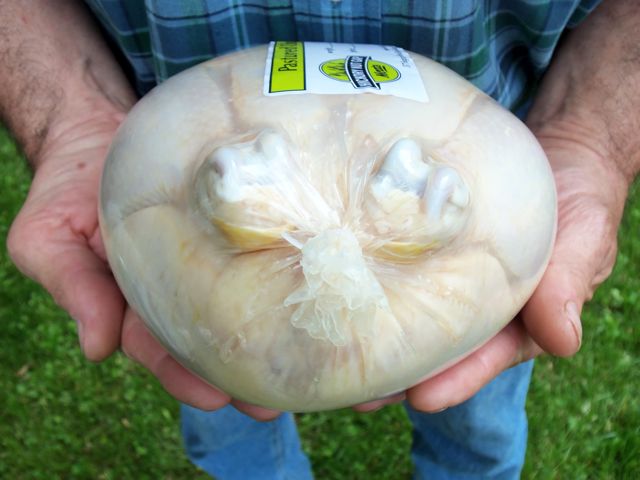
As I am sitting here in the living room of my house, typing on my computer, there are 50,000 poultry shrink bags in boxes,  stacked over four feet high and ten feet long right next to me. They are the next chapter in our Planet Whizbang home business. You can learn more at www.PoultryShrinkBags.com
.
We are now selling poultry shrink bags like shown here. You can see a complete photo-tutorial about how to use these bags at This Link
.
Pictures From Our Garden
.
This is part of the garden in early June
We love beet greens!
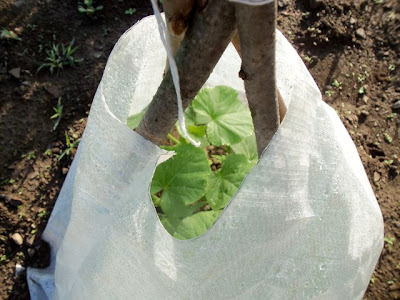
I've been experimenting with some homemade solar cones this year.
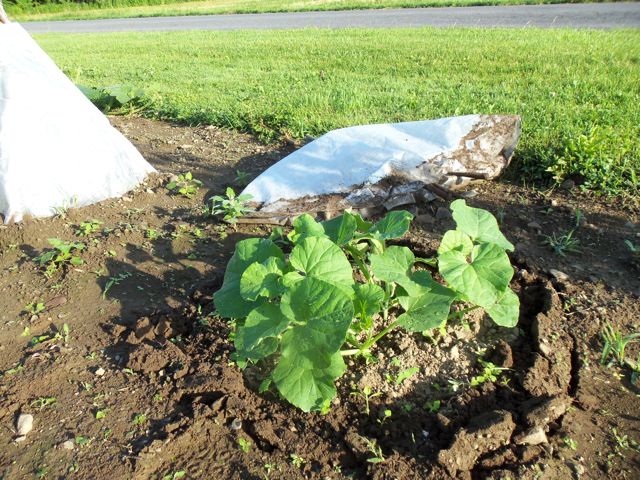
The solar cones create a terrarium-like environment, with diffused light, which is perfect for melons and other heat-loving crops. I planted the melons a bit late this year and I planted the seeds directly (not transplants), so I was hoping the solar cones would get them off to a fast and healthy start, and that's exactly what they did.
Here are the melon plants with the solar cone removed. They are perfectly healthy,  perfectly beautiful, and ready to really take off.

.
Agrarian Nation 
.

 I hope you have been reading my twice-a-week postings at Agrarian Nation. If not, here are links to the  June excerpts: