Dateline: 8 September 2014
 |
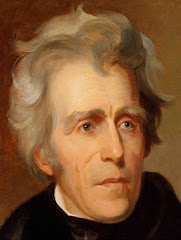
Marion King Hubbert
1903-1989 |
I'm sure that most people who read this have heard of "peak oil." Some people think peak oil is hogwash. Many of these people assert that we are not running out of fossil fuels (coal, oil & natural gas). But doubters who say that reveal their misunderstandings about what peak oil is all about.
Though fossil fuels are currently being used up as fast as they can be extracted from the earth, peak oil has never been about running out of fossil fuels as much as it is about not being able to mine enough fossil fuels out of the earth to sustain continued economic-industrial growth.
Concerns about peak oil originated with M. King Hubbert, a geoscientist who recognized back in the mid 1950s that the world's consumption of fossil fuels was increasing exponentially, that the once-plentiful worldwide supply would naturally decrease, and that the ever-expanding industrial era could therefore not sustain itself perpetually.
At first, very few people took Hubbert's predictions seriously. There was, after all, an abundance of crude oil to extract. Then, American oil production peaked in the early 1970's, just as Hubbert said it would (some 15 years earlier). He further claimed that worldwide oil production would peak around the turn of the century. His "peak oil" graph of world oil production (pictured below) is a familiar one to anyone who has looked into the subject of peak oil.
 |
| Hubbert's famous "peak oil" curve |
There are clear and compelling indications that we are today at the top (or rounding the top) of Hubbert's peak oil graph. Yes, it is true that there are vast deposits of oil sands and such as that, with enormous amounts of energy in them, and it is true that America is currently producing more energy from newer oil and gas extraction technologies. But it is also true that the new extraction technologies require a whole lot more energy input to get energy out.
The net Energy Return On Investment (known as EROI) is more important than how much energy is being produced. The EROI is not very high on the newer extraction technologies, as compared to just pumping millions of barrels out of the once-vast oil reservoirs of the world. In the final analysis, it is the economics of energy extraction that determines its true viability.
If you want to learn more about peak oil, I recommend this documentary on YouTube: A Crude Awakening. Also if you haven't already done so, be sure to read my essay about Professor Walter Prescott Webb's Boom Hypothesis of Modern History. I don't know if Webb (a historian) and Hubbert (a scientist) knew each other but they both came to the same conclusions about the rise of the industrial age, and it's certain decline.
As for Hubbert's other peak, here it is…
 |
Figure 10
This is Hubbert's other peak |
"A better appreciation of the brevity and exceptional character of the epoch of the fossil fuels can be gained if we view it in the perspective of a longer time span of human history than we have considered heretofore. In Figure 10 the complete cycle of exploitation of the world's total supply of fossil fuels, coal and petroleum, is shown on a time scale extending from 5,000 years in the past to 5,000 years in the future."
So what we see is a 10,000 year timeline along the bottom of the graph. The vertical line of the graph appears to be a measure of fossil fuel energy consumption. The upwards "blip," representing the fossil fuel epoch, spans approximately 400 years of human existence. We are, I would guess, beyond the half-way mark, heading down the other side. Please note that there is a point, just over the top, where the decline gets real steep.
Hubbert refers to this sharp and lofty rise (and decline) in the span of world history as a "transient and ephemeral epoch."
Here is another quote from M. King Hubbert's 1976 article…
"During the last two centuries we have known nothing but exponential growth and in parallel we have evolved what amounts to an exponential-growth culture, a culture so heavily dependent upon the continuance of exponential growth for its stability that it is incapable of reckoning with problems of nongrowth."
#####
I want to point out that the 5,000 years of history prior to our current transient and ephemeral epoch were an "agrarian epoch." And the 5,000 years after represent the neo-agrarian future that awaits us.
It actually awaits the generations that follow us. But I really do think we as a civilization are on the other side of the industrial epoch peak. It's all downhill from here.
I also want to point out that Hubbert's timeline doesn't stop at the end of the industrial age.
Of course, Hubbert isn't the one who decides that history goes on, but his assumption was that it will, and I think we should all consider that it will.
Each of us has a limited history of our own on this earth, but our children and our grandchildren will follow us and, Lord willing, they will play their part in this grand panorama of Providential orchestrations. When I look at the possibilities, and probabilities and realities that lie just ahead, I am left wondering what I can do now to help my children and grandchildren to be better prepared to deal with the world as it will be.
I think one important thing that can be done is to stay ahead of the curve, so to speak. That is, to personally embrace the agrarian paradigm that has been (and will once again be) the historical norm. If we don't do this, if we cling to, and are completely dependent upon the established systems and institutional promises of a civilization that can not be sustained, that is not being helpful, to say the least.
As a Christian man, I am compelled to think multigenerationally. When I look at how God works throughout history to achieve his purposes, I see that governments and institutions play their part, but God does his greatest work over the course of generations through humble, God-fearing families. Which brings to mind a Bible verse that I take very seriously...
"[God's] mercy is on them that fear Him, from generation to generation." (Luke 1:50)


 Posts
Posts










.JPG)
.JPG)


.JPG)

.JPG)



.JPG)


